Review - Viltrox AF 28mm f/4.5 Chip for Nikon Z
Who wants some pancakes?
As a bonus to my readers, use coupon code SCOTTTUCKER at the Viltrox store for extra 10% off - click here to shop at Viltrox
Disclosure: this lens was provided for review free of charge from Viltrox, and they have not had access to this review before publication. This review contains affiliate links for this lens and other accessories.
Viltrox AF 26mm f2.8 EVO first look
Viltrox AF 35mm f1.8 EVO review
Viltrox AF 55mm f1.8 EVO review
The search for small, light, and capable lenses that compliment the Nikon Zf rolls on, this time with the Viltrox “Chip”, an impossibly tiny 28mm prime that feels more like a lens cap than a lens, with a cost that is under a hundred bucks.
Viltrox was able to shrink this lens thanks to its main party trick: a fixed aperture. Most lenses have an adjustable aperture from wide open to f/16 or f/22, but not the Chip. You get f/4.5, and that’s all you get; as we dive into the review, we’ll see why this is both liberating and frustrating.
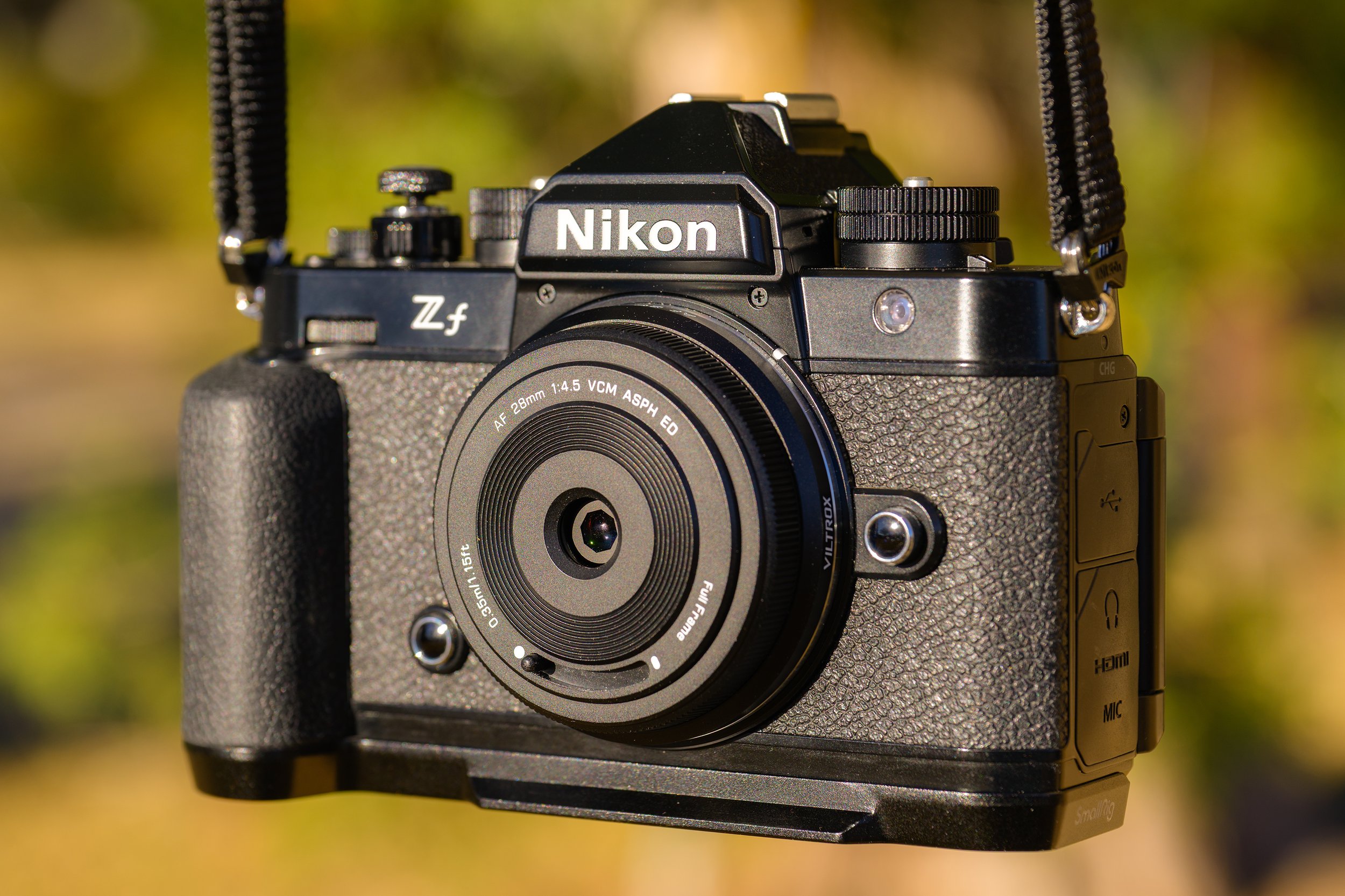
The downright diminutive Viltrox “Chip” on a Nikon Zf
The Lens
Price
$99 USD - 5% off with code “SCOTTTUCKER” at the Viltrox store - Amazon
Tech Specs
80g - NO filter thread - NO hood - 6 elements in 6 groups design - 13.8” Minimum Focus Distance - 0.1x magnification - Voice Coil autofocus - Fixed f/4.5 aperture
Build Quality and Handling
The Chip is a blend of metal and plastic construction, and as a product of being SO thin, there is hardly any surface area that you will be handling when mounting and unmounting. The texture around the barrel ring allows for a good grip and is just deep enough to give you confidence when the lens is off the camera in-hand.
There is a built-in “lens cap” which is simply a plastic lever that controls a plastic cover that slides over the front element. This is a nice touch and well designed. However, the lever is made of very cheap feeling plastic and feels like it would become the weak point of the lens over time. I wish they would have improved the material of the lever to match the rest of the lens.
The lens features voice coil autofocus motors, and as a result, the rear element tends to bounce around rather dramatically when the camera is off or the lens is off the camera. With a camera like the Zf, which has an extremely bouncy IBIS unit when powered off, this makes for one rattly combo. Once the camera is powered up, the lens motors keep the element in place. I was so surprised by the clunkiness that I reached out to Viltrox to ensure I didn’t have a broken copy and they confirmed this is how the lens works by design.
There is no filter thread or capability for a hood…more on that later.
There is no focus ring.
There is no weather sealing on the mount.
There is a USB-C port integrated into the mount for firmware updates. I wish every company would copy this design! It hides the port away, keeping it safe from dust and grit, yet provides a very simple interface for lens updates as needed. I ran a firmware update on this lens and the process was very straightforward.
Note: I had to dig out an old Windows laptop to perform the firmware update, as the lens would not show up as removable media on either of my modern Mac computers.
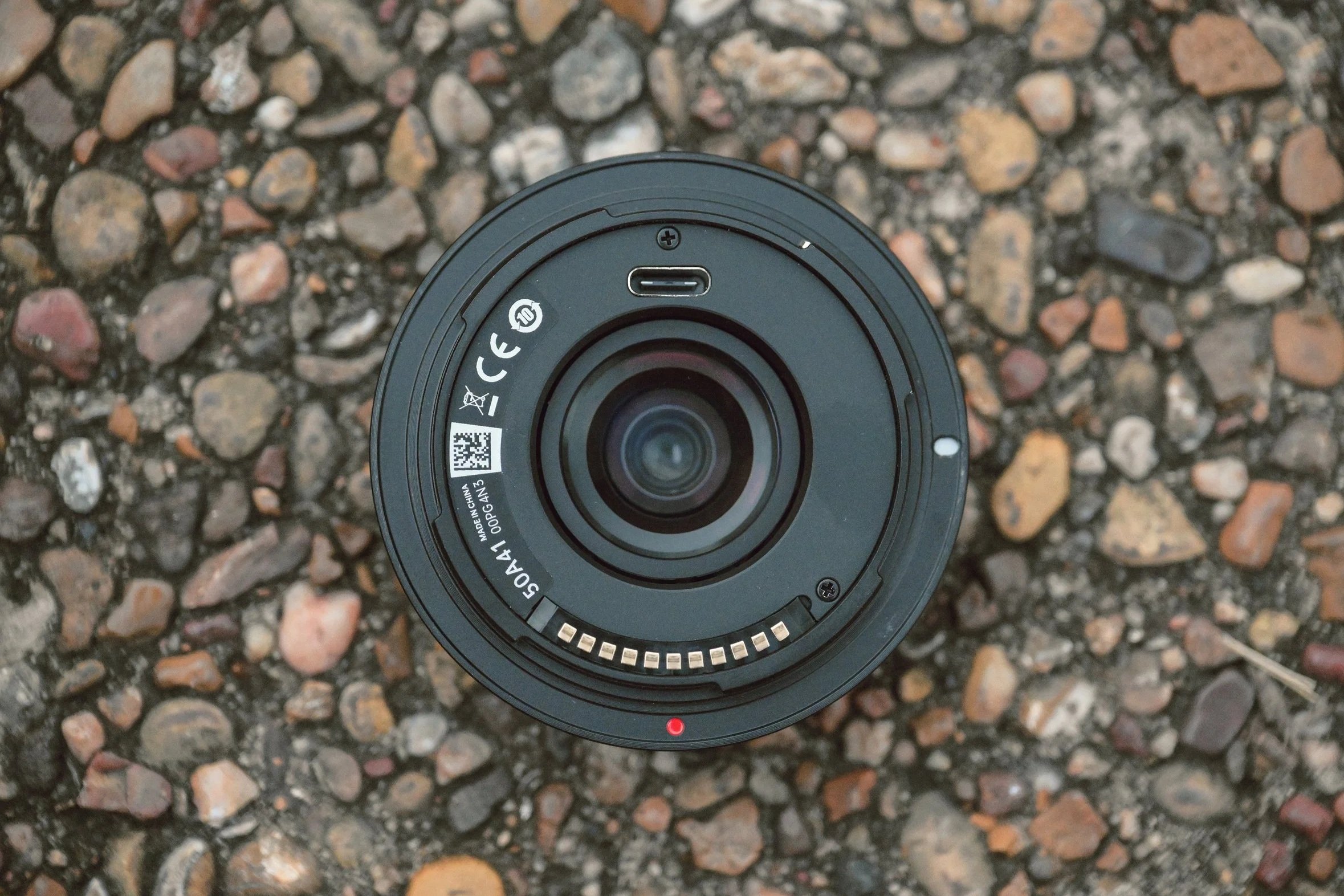
The discrete USB-C port
Build quality verdict: I have been pleasantly surprised by the overall build quality for a sub-$100 lens. The parts of the barrel that you will handle feel good in hand, and the only disappointment is the cheap feeling lens cover and lever assembly. The rear element bouncing around garners no confidence but appears to be working as intended.
Autofocus Performance
Here is where the lens settles back down into its price bracket. Generally, on Nikon Z cameras, AF-S with a small AF box is the foolproof mode for most lenses, yet I found that the Chip would sometimes get confused and rack focus fully before finally settling on a target. If you have AF Priority set to Focus like I do, that means you can miss a shot while this racking and refocusing is taking place. This reared its head more often when trying to do street shots with a slow moving subject that was walking in front of a busy background.
The best autofocus performance for me was simply shooting still subjects in decent light. Doing a walkabout in the city and shooting buildings gave me no issues and the autofocus was reliable.
Things get more inconsistent once you put the lens into AF-C, as the tiny AF motors just aren’t up to the task. However, that’s not how this lens is marketed, and I don’t think many people are buying it expecting stellar AF-C hit rates.
Of course, low light focusing takes a hit sooner than other “faster” lenses, as you only have f/4.5 to work with; thusly, the Chip became an outdoor/daytime lens for me.
I did some testing of video with AF-C and would not recommend this lens for video work thanks to inconsistent subject tracking and focus pulsing.
There is no focus ring for manual focus. However, as I discovered in a fit of cleverness, you can simply focus on your desired distance in AF-S and then move the camera to MF to lock in the focus distance. I found myself doing this often as a way of getting around the autofocus inconsistencies if I was going to be shooting the same focus distance for a bit.
Autofocus performance verdict: AF-S is the most reliable mode, though even that has issues from time to time depending on the speed of the subject and background conditions. AF-C is not recommended in my testing. Manual focus only exists if you pre-focus in an AF mode. The size of this lens and its AF motors seem to come at the expense of autofocus performance.
Image Quality
This category is going to be an extremely mixed bag.
Firstly, I was pleasantly surprised to see how nice the bokeh can be, even when limited to f/4.5

A few selfies at various arm-length ranges to test bokeh at different focus distances
The element coatings lend themselves to really nice color straight out of the camera, and I enjoyed post processing these files quite a bit from a color perspective.

The Chip captures color and contrast well in ideal lighting conditions
Vignette with the Chip is present though not egregious. There is a Lightroom correction profile for this lens that fixes the vignette as desired.

A GIF comparison of vignette straight out of camera and with the Lightroom correction profile applied
Now, for the not-so-good. Even with the Chip being an f/4.5 lens, I quite often got shots that felt just out of focus outside of where the focus point was. This becomes more obvious the closer the subject is, and especially so if the subject is shot at an angle instead of head-on. Most of my other primes become super sharp by f/4.5 so this was certainly a surprise…the Chip renders much more like other lenses do wide open from an edge-to-edge sharpness perspective.
There is a significant amount of pincushion distortion with this lens which could contribute to overall softness especially outside of the center of the frame. All photos in this review are uncorrected, but I found that I needed somewhere between -4 and -10 in Lightroom to correct the distortion.

I had focused on the green price, and you can see just how fast the words under it, as well as the Sunoco logo, fall out of focus and exhibit ghosting
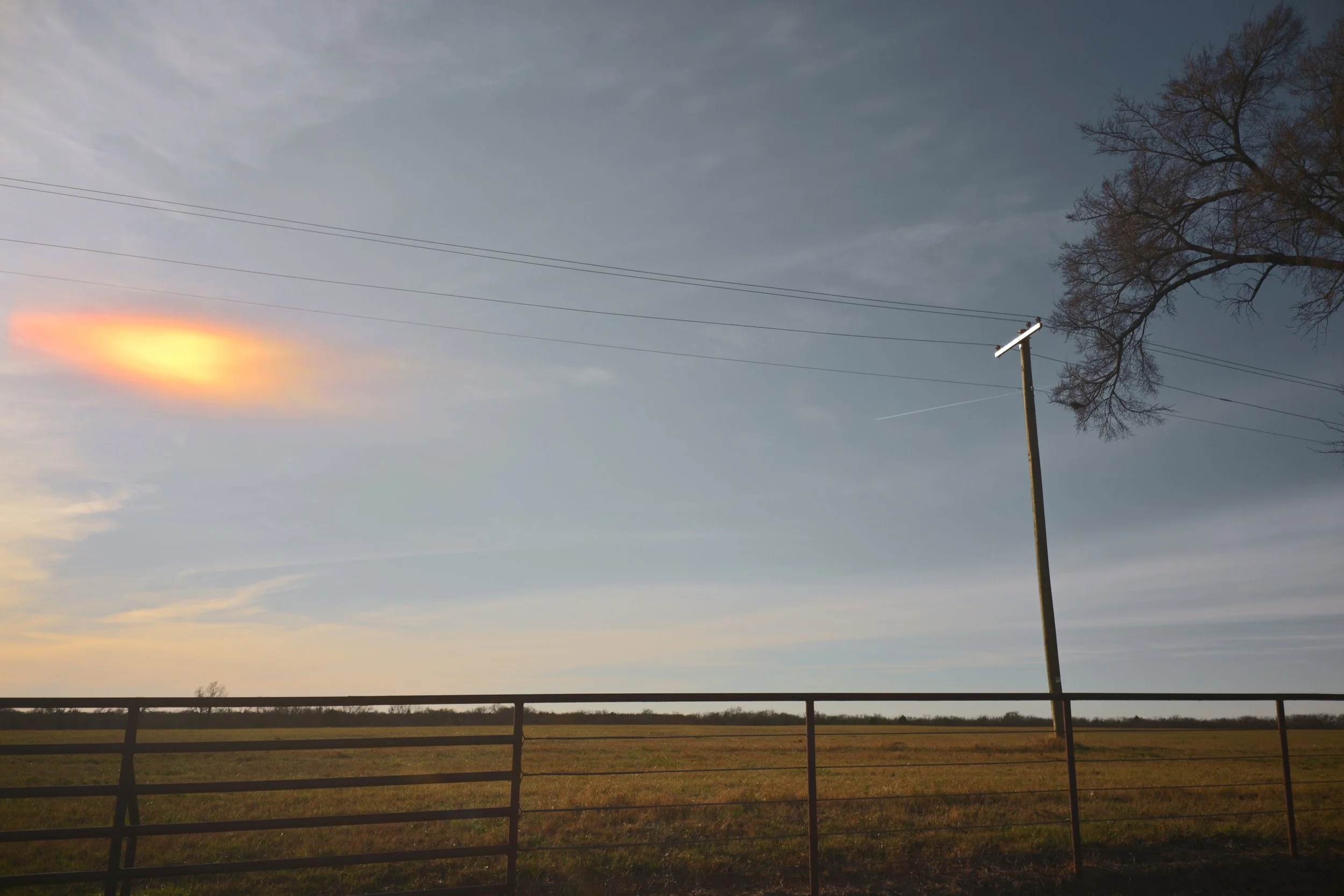
Worse than the inconsistent sharpness, however, is the flaring when shooting with side and backlit light sources. I want to share how Viltrox markets this aspect of the lens :
“When presented with backlit point light, the lens produces a starburst effect that transforms light rays into spiky beams.”
Ok, I have never had a lens that, when at f/4.5, produced pleasing starburst effects and this lens is no exception. Even if you somehow manage to get a shot in these conditions without flaring from the sides, the “starburst” is extremely garish with rainbow streaks and adds nothing to the image in my opinion.
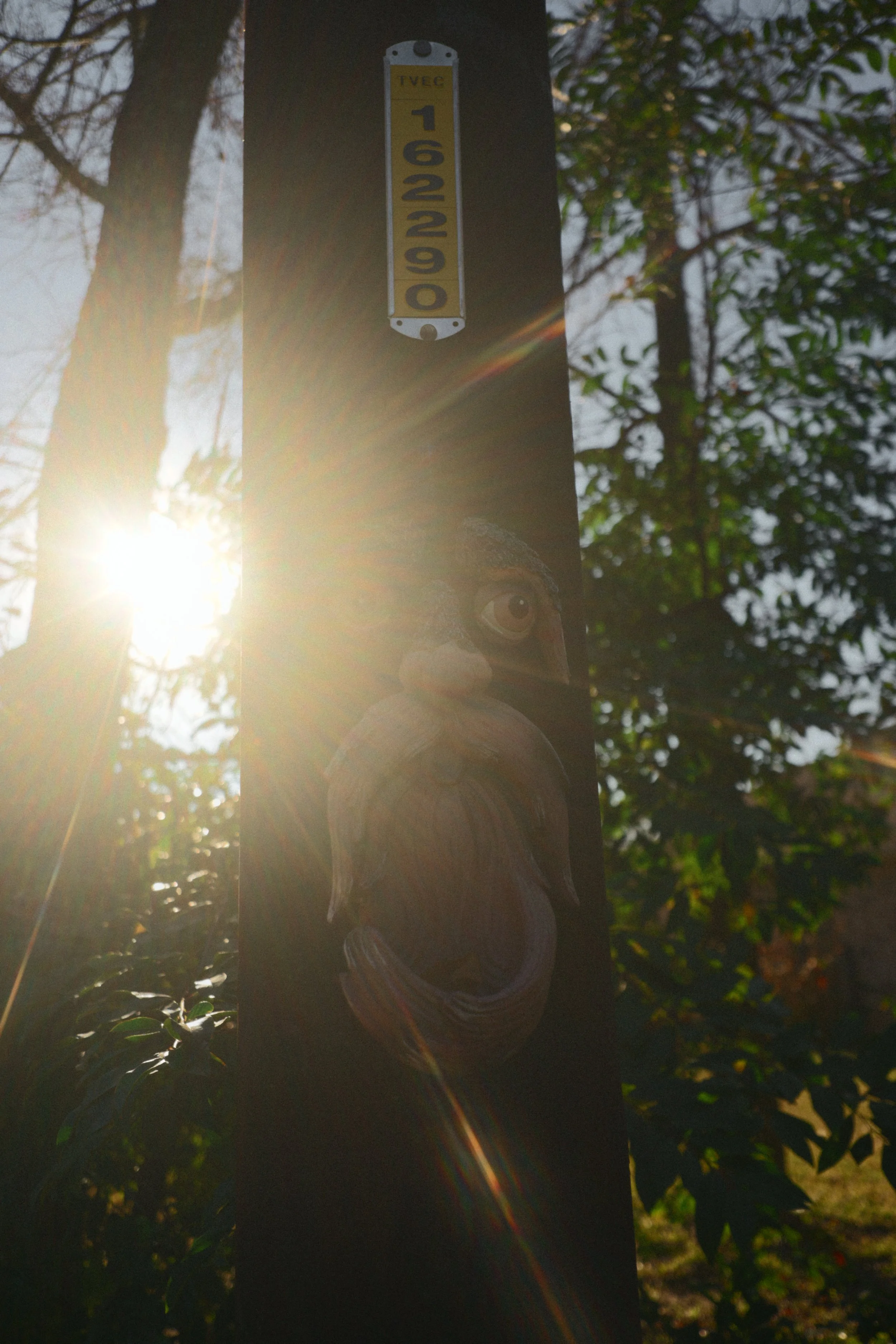
An example of the Chip’s “starburst” effect
But back to the flaring itself…it presents as veiled flare over most of the image, instantly killing contrast and draping the photo with a layer of unusable glare.
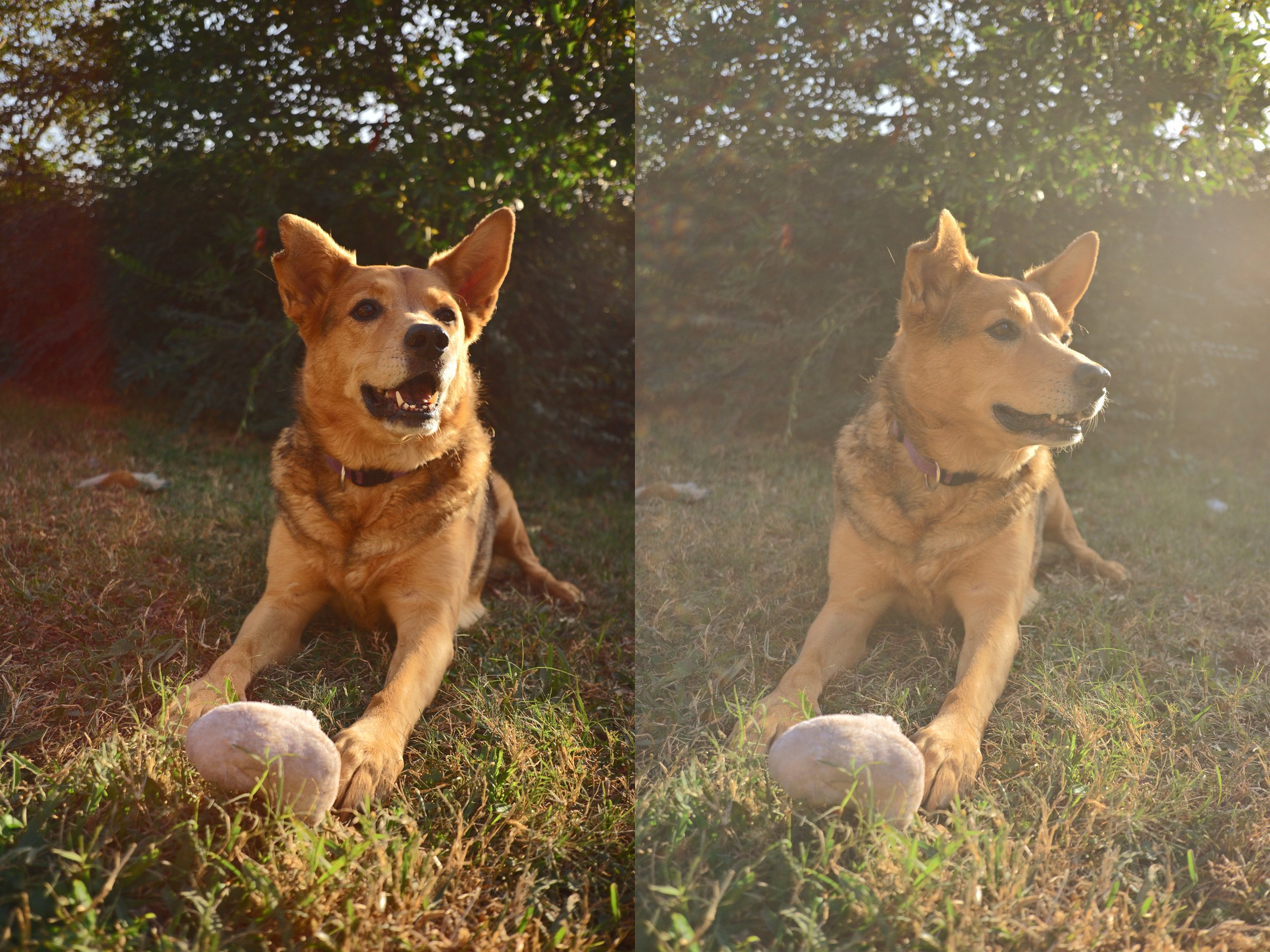
You can see that just a slight movement of the camera took this shot from having circular flare to complete veil flare
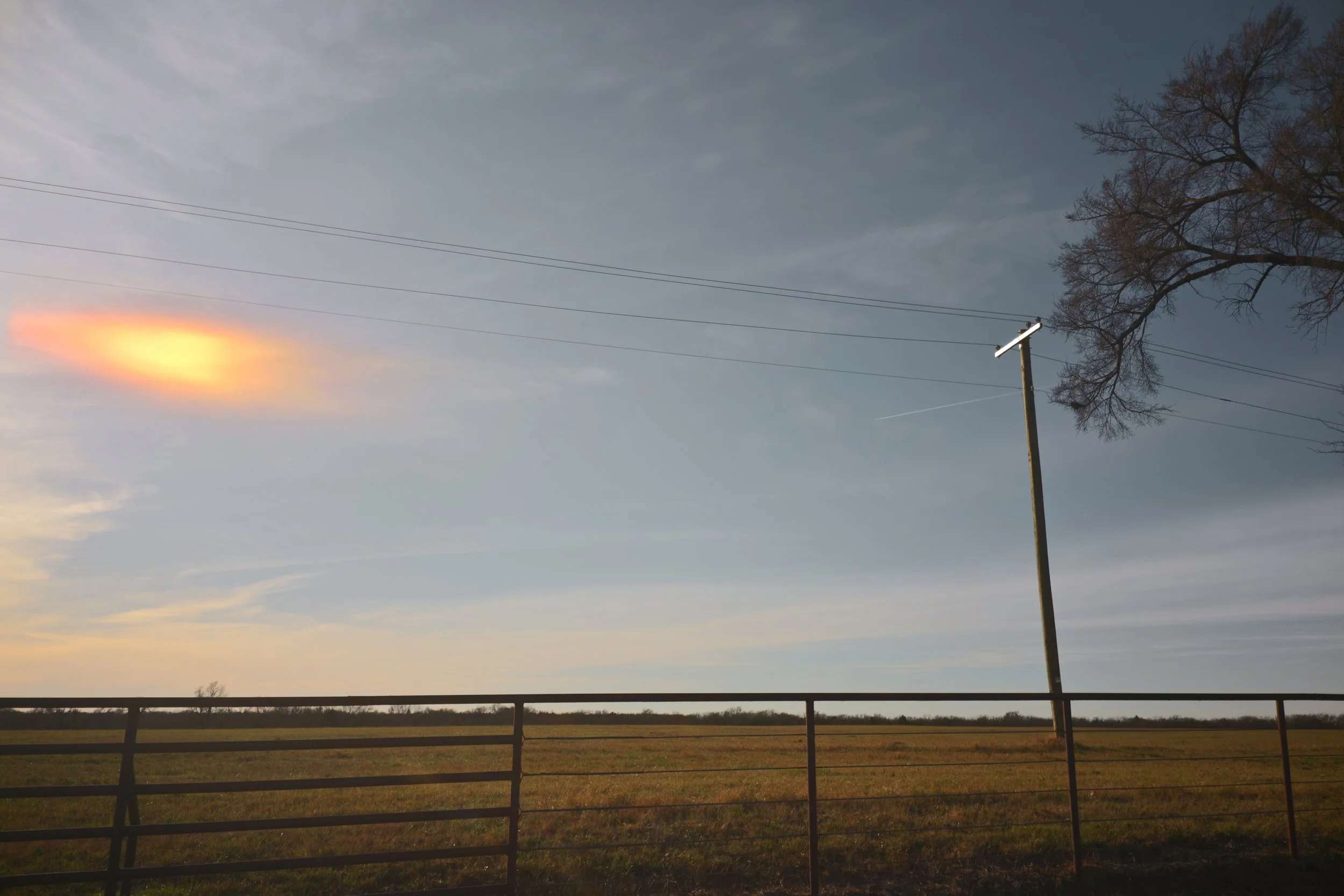
Example of an extremely hot flare with the sun off to the side at about 45 degrees
The more I shot the Chip, the more I realized that all of this flaring means you are essentially limited to shooting with light at your back…not always an option depending on the situation! This is by far the largest drawback of this lens to me, and it really hampers the versatility that we assume we are getting with a small and light package like the Chip. More often than not I found myself shooting one handed so I could hold my left hand up to act as a lens hood, which…not always possible at 28mm, and definitely not a pleasant shooting experience.
Given the design of this lens, a hood would be impractical and go against the ethos of the Chip, likely doubling the length of the lens. It does prove to be a major design concession in the real world, and one you will need to account for on an ongoing basis as you shoot.
One last note on image quality. While the images you see in this review are exclusively from the Nikon Zf, I did test the Chip on the Nikon Z9 and found the performance markedly improved on the Z9. I have a theory about why this is:
I have reviewed several third party lens that struggle to create tack sharp images with the Zf’s IBIS unit in Sport mode. One brand I worked with admitted that this was due to a rear element that was not engineered to the Zf’s specs in regards to IBIS. When they manufactured a more robust rear element using a Zf as a test platform, they were able to improve the lens’ overall sharpness when used with the Zf.
Unfortunately, Sport mode is the only IBIS mode on Z that shows you the actual final composition…Normal mode will “flick” the IBIS unit at the time of pressing the shutter and your image is shifted from its composition in the EVF. As such, I refuse to use Normal mode even if it claims to generate sharper photos.
The irony here is, of course, that the Chip is a lens designed for bodies like the Zf, not the Z9. The IBIS unit that makes the Zf so fantastic with first party glass is turning out to be the Achilles’ heel for third party glass.
Image quality verdict: Sharpest (but never critically sharp) in the center with focus fading quickly as you move away from the center. Still a bit of ghosting on things like power lines and text, even at f/4.5, and flares that can ruin an image if shooting with the sun anywhere in front of or to the direct side of you. I would not use this lens for anything beyond very casual walkabout shooting where your desired outcome is snapshots for socials or sharing with friends, perhaps printing up to 8x10. Image quality is considerably better when using with a camera with a less aggressive IBIS unit.
Conclusion
When Viltrox reached out and proposed this review, I was intrigued…the Chip isn’t a lens I’d ever buy for myself, but the prospect of using such a unique design on the Zf was irresistible.
It is extremely liberating to have fewer choices while out in the field, and the Chip takes this concept to the next level. Put your camera in Aperture Priority and Auto ISO and all you have to do is worry about the composition you want…
…unless the sun is at your face…or you want to shutter drag, but can’t because you can’t kill enough light with the fixed aperture…or you are at the beach and want to protect the front element from seaspray because you can’t add a protective filter…or you come across a once in a lifetime moment and the autofocus lets you down and you miss the shot.
This is where the Chip becomes a tough value proposition for me. Yes, it’s cheap, but things don’t magically become worthy just because they don’t cost a lot.
If you want an extremely tiny lens that absolutely disappears when mounted on your camera and you’re after the more lo-fi aesthetic it provides, then there is value here for you. If you are looking for good autofocus performance, portfolio-caliber image quality, and a lens that is versatile in all hours of the day, then you should look elsewhere.
The Chip is a one trick pony, and it does that trick well enough.
Everything else, though? Not so much.
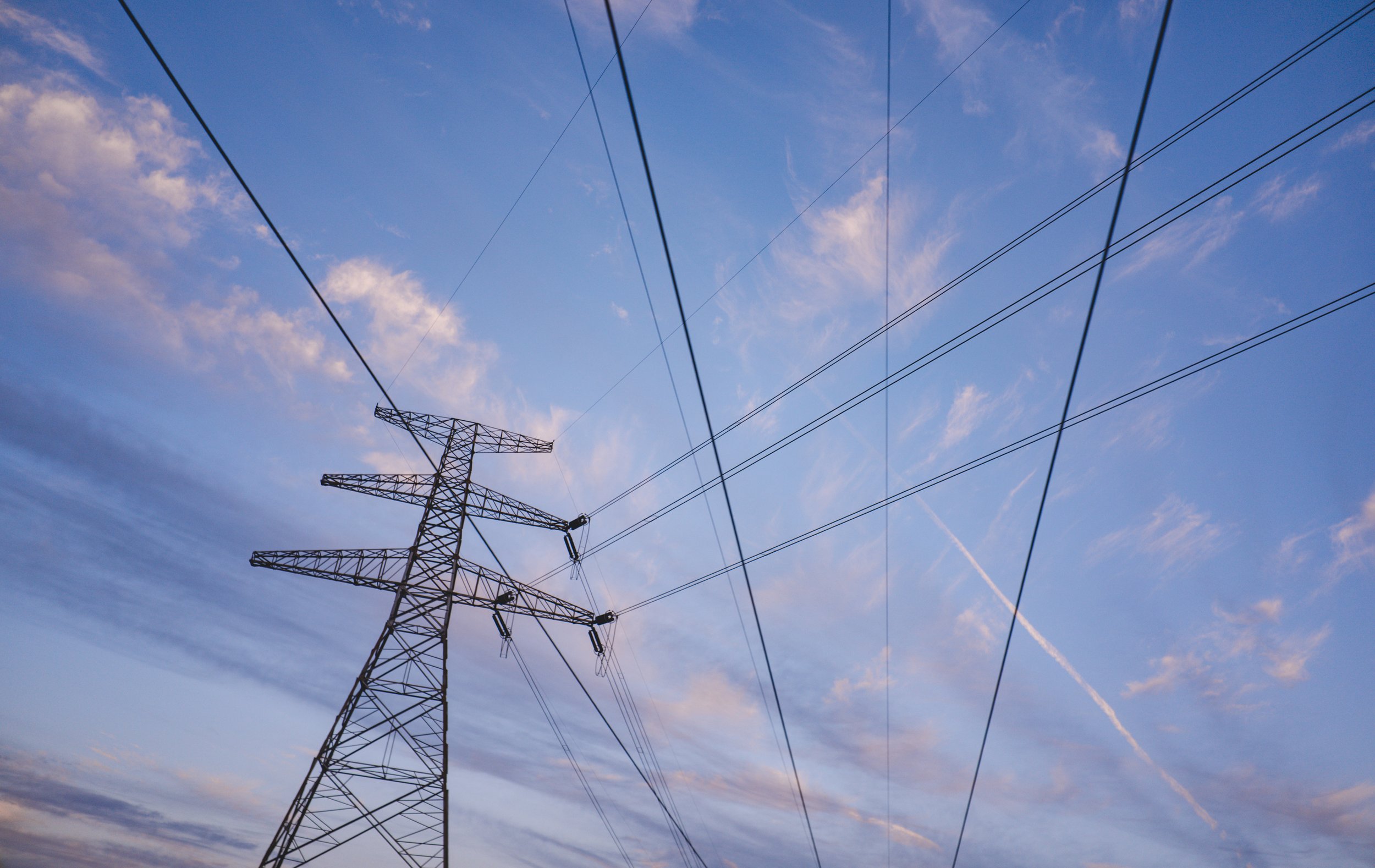
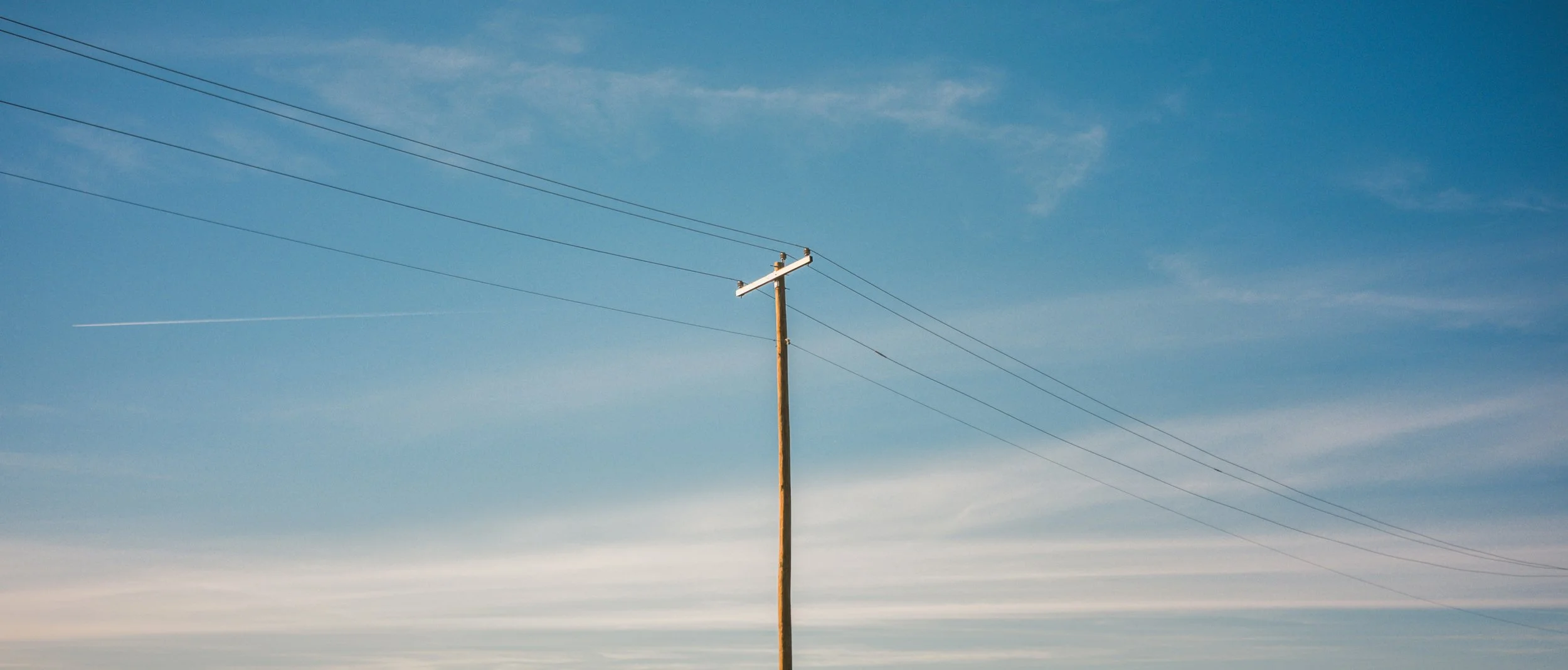
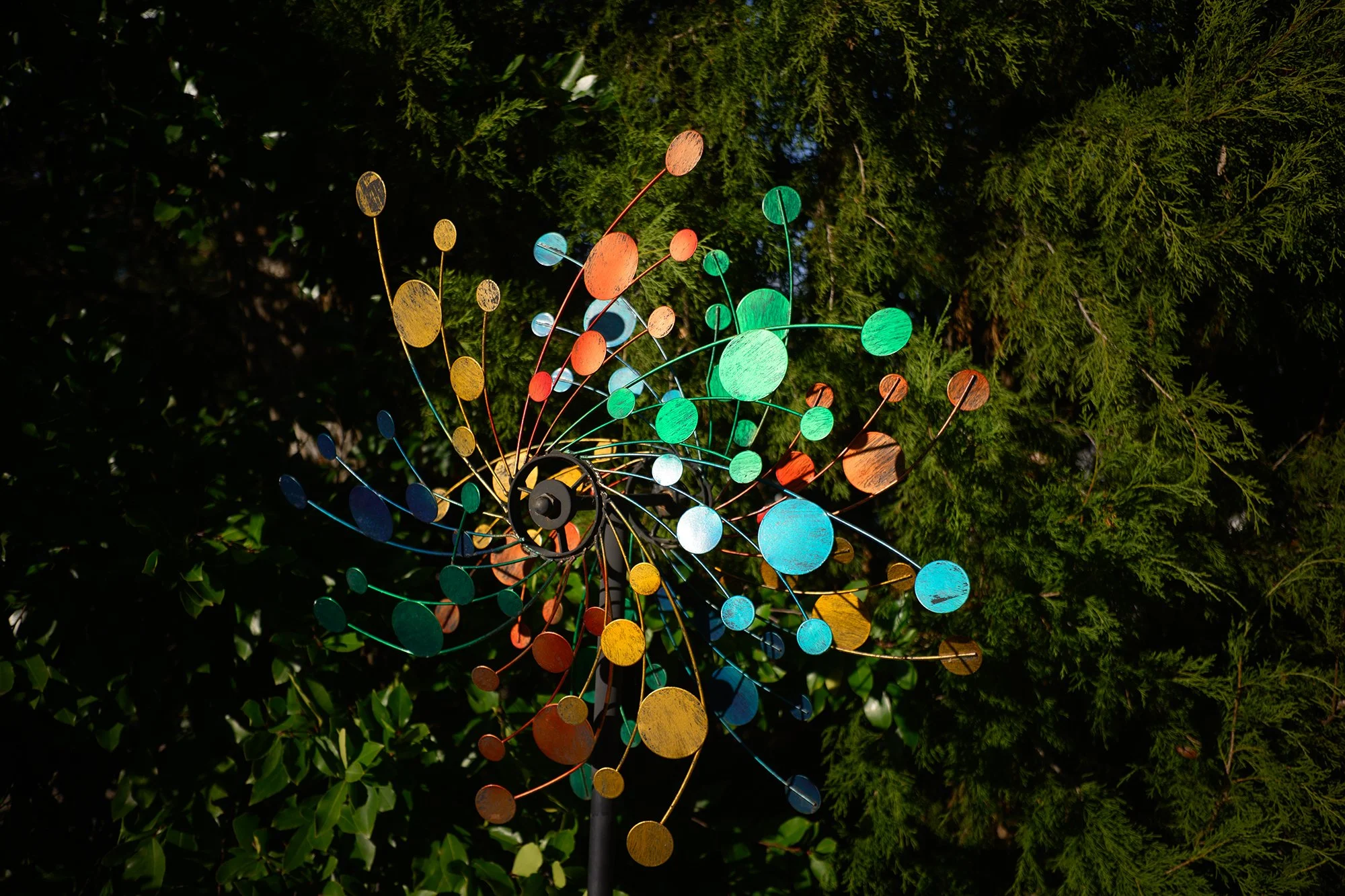
Below is a gallery of shots from the Chip while reviewing it for the last few months, including examples of the flaring and starbursts discussed in this review, viewable in full screen mode.
As always, I appreciate you reading my reviews. If you found this helpful, please consider buying me a coffee with the button below so I can fuel up and bring you more content like this.
-Scott