First look - Viltrox AF 26mm F2.8 EVO for Nikon Z
A full frame pancake, but a hidden APS-C gem
As a bonus to my readers, use coupon code SCOTTTUCKER at the Viltrox store for extra 10% off - click here to shop at Viltrox
Related articles:
Viltrox AF 28mm f4.5 Chip review
Viltrox AF 35mm f1.8 EVO review
Viltrox AF 55mm f1.8 EVO review
Disclosure: this lens was provided free of charge from Viltrox in exchange for my thoughts on it, and they have not had access to this first look before publication. This article contains affiliate links for this lens and other accessories.
Another month, another exciting new Viltrox release for Nikon Z shooters. This time we have their take on a 26mm f2.8 pancake, not dissimilar from Nikon’s first party option in terms of dimensions, but with an aperture ring that the Nikon lacks. A slew of other interesting features separate two similar looking lenses, and I’ll break it all down.
Please note: I did not have my normal amount of pre-release access to this lens as I typically do, and as such am treating this as a “first look” article instead of a comprehensive review. That said, I have had enough time with the lens to feel fully acclimated to its features and optical qualities, and this will still be one of the more comprehensive articles you’re likely to come across. I may fully review it later, or release a A/B comparison to the Nikon 26/2.8.
The Lens
Price
$299 USD MSRP, use coupon code “SCOTTTUCKER” for extra 5% off at Viltrox - click here to shop at Viltrox — B&H — Amazon
Tech Specs
170g - 43mm filter thread (on removable bayonet hood) - 7 blade aperture - 7.8” Minimum Focus Distance - 0.2x magnification - Gear-type stepping autofocus motors - f16 minimum aperture - Magnetic lens cap - USB-C port inside the mount for updating firmware - Rubber gasket at mount
Build Quality and Handling
Having reviewed several of its larger EVO siblings this year, the build quality of the 26 EVO immediately feels familiar - the heft of a metal mount, nicely textured materials, and a tight fit and finish that aligns with the omnipresent DNA of the EVO line.
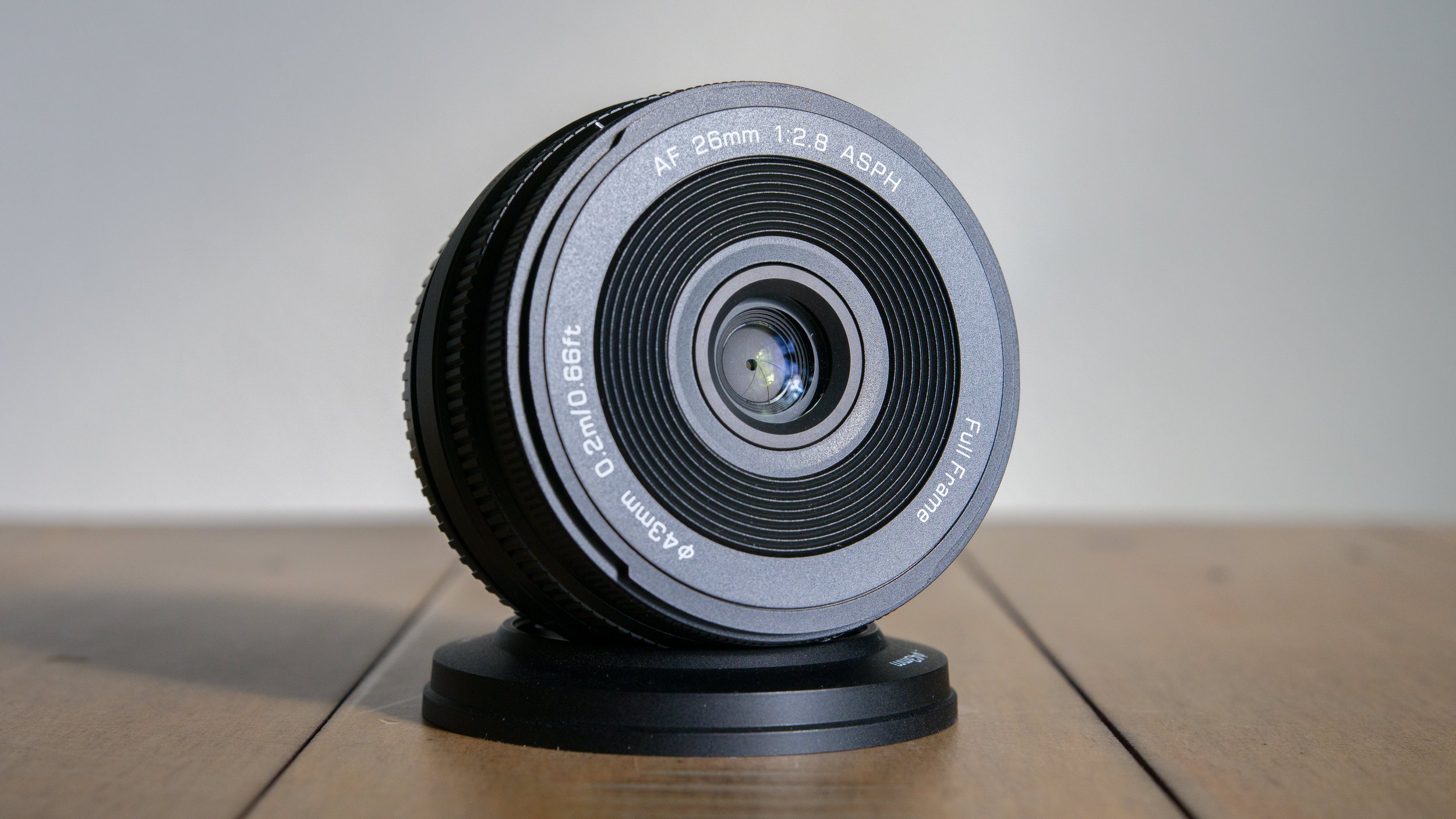
The 26 EVO shares the small front element that has become a fixture on EVO lenses
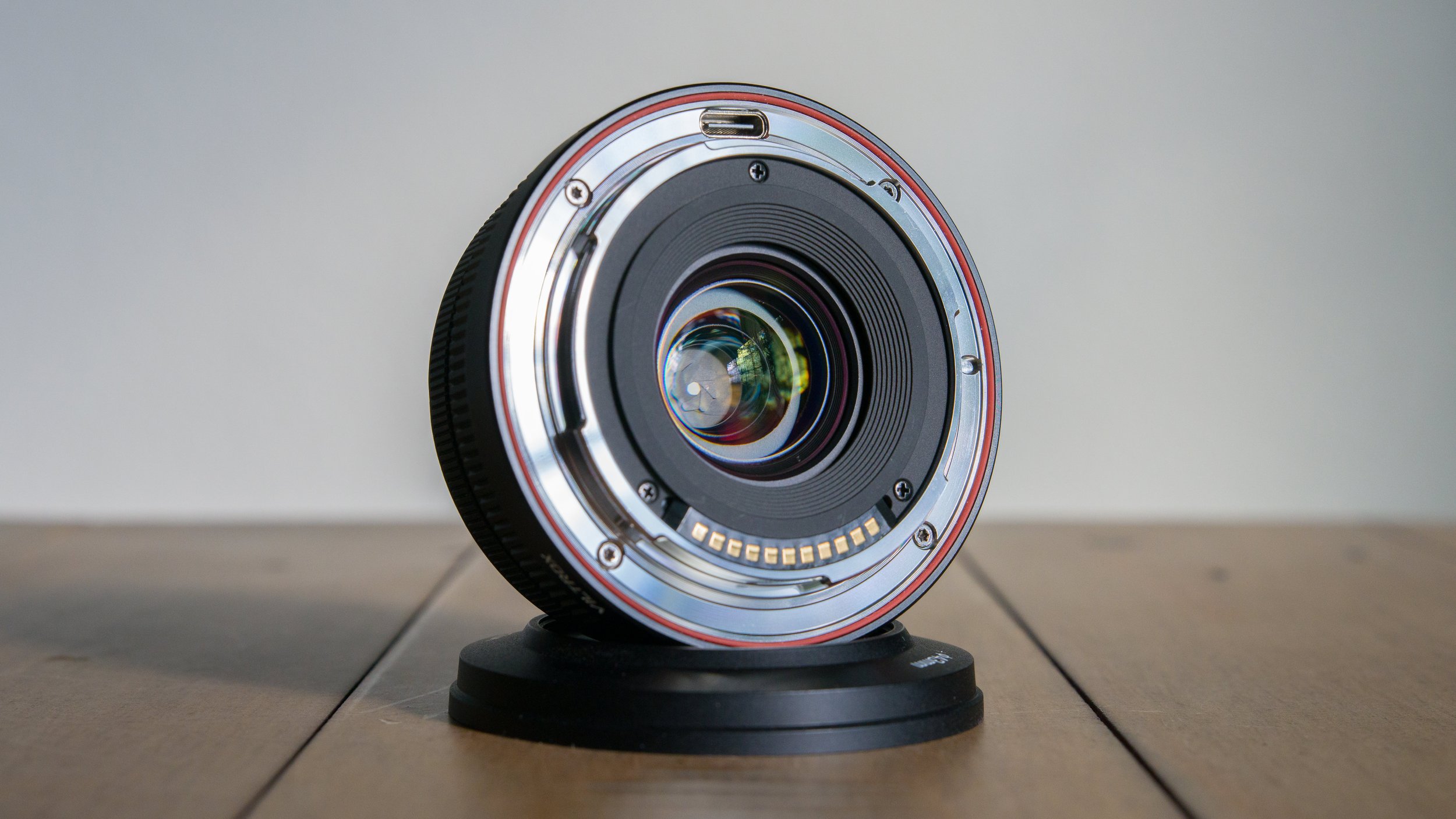
Familiar EVO features like the orange mount gasket and internal USB-C port are here on the 26 EVO as well
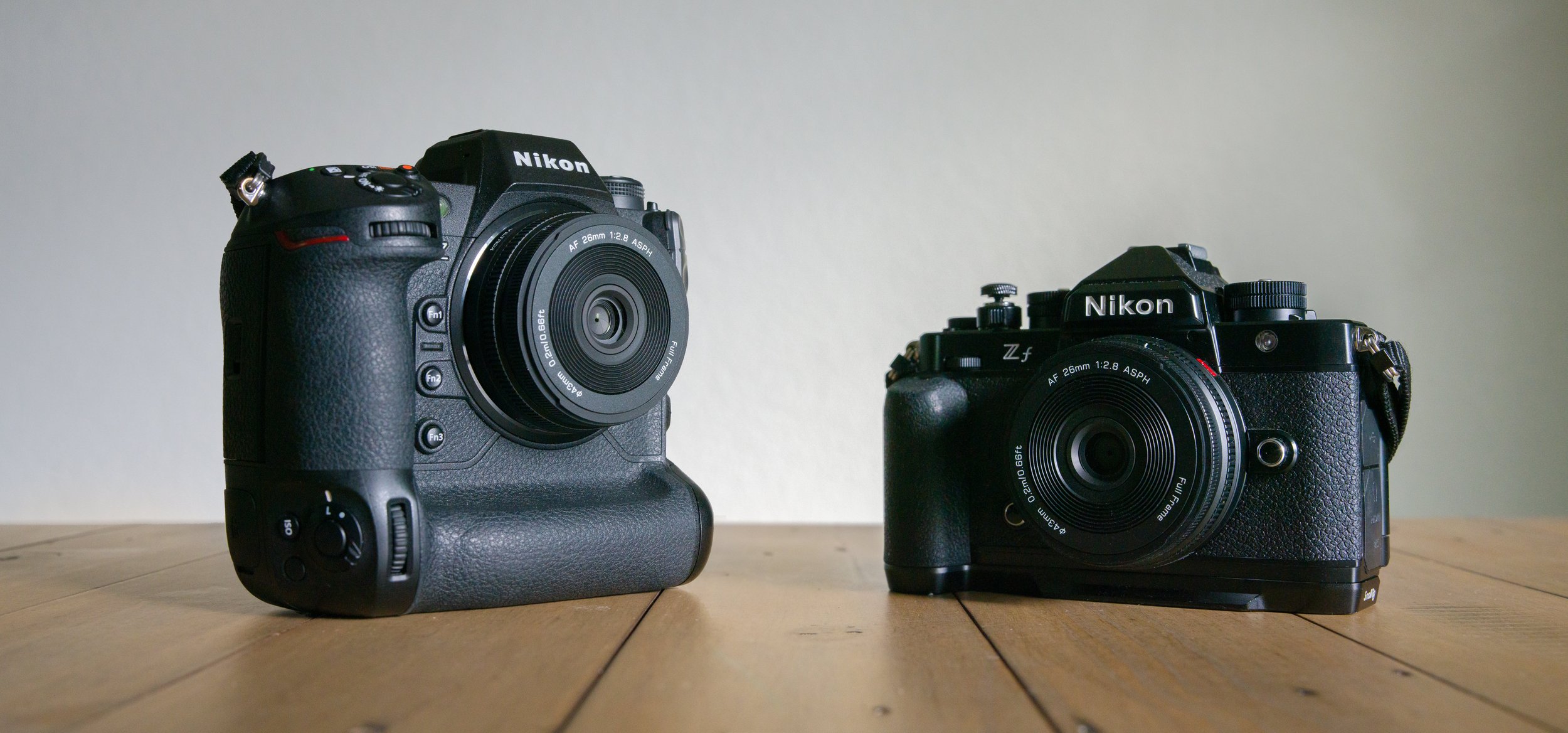
The 26 EVO mounted onto the Nikon Z9 and Zf for scale
Some key differences from the rest of the EVO lineup jump out very quickly, however.
Major control surfaces have slimmed down, with the aperture ring gaining a tighter-spaced texture, while the manual focus ring has become ostensibly flush with the body instead of being slightly raised from it.
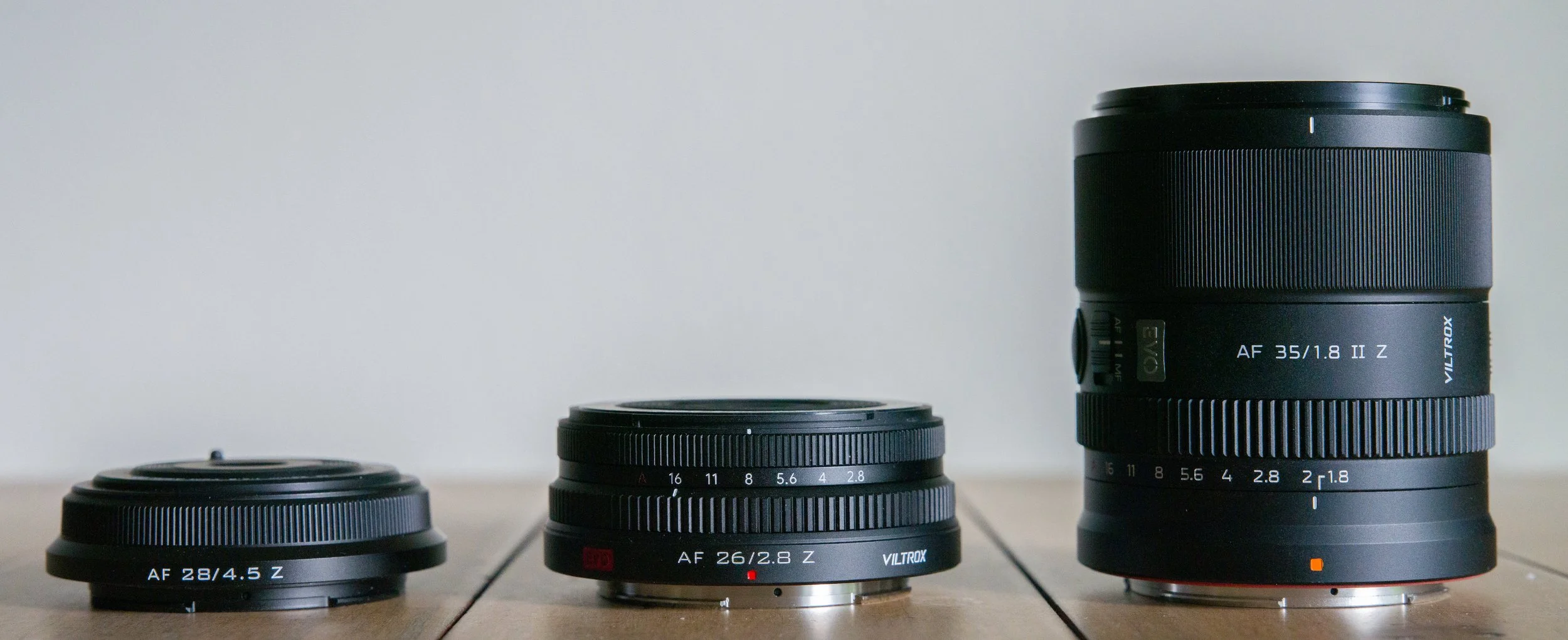
You can see the design influences of both the 28 Chip and 35 EVO, for both better and worse
Regarding the aperture ring, the biggest change here is the physical operation of it. On the 35/55/85 EVO lenses, we have a static dot on the lens and rotate the numbers on the ring to match up with the dot. On the 26 EVO, the opposite is happening - the aperture numbers are printed directly onto the lens barrel, and the aperture ring rotates a dot to align with our preferred aperture.
The effect of this flip-flop is that the aperture ring rotates the opposite direction as all of the other EVO lenses on Z mount.
This is really disappointing, because my muscle memory works against me here, constantly having me rotating the wrong direction, or wondering why I can’t stop down from wide open (I’m rotating into a brick wall). This feels like an engineering decision instead of a user experience decision. I can only assume the ring works this way to enable the small barrel length and still provide enough of an aperture ring to hold.
Annoyingly however, when the hood is mounted, we have a huge dot perfectly centered on the lens barrel that could have pulled double duty as an aperture mark for a slightly larger aperture ring, enabling the correct rotational direction. This is a frustrating design decision that has reared its head in my use during every outing. Muscle memory is important for photographers that use lenses with physical controls, and this interface is counter-intuitive for Nikon Z shooters to a fault. I have resorted to simply setting the aperture to A on several occasions, controlling aperture from the command wheel instead. However, the A setting doesn’t have a deeper detent than any of the aperture values, and is just as easily changed by accident. A deeper detent on A or small aperture lock button that engages while set to A, similar to some Fujifilm lenses, would have gone a long way in improving the experience here.
The manual focus ring, something I personally rarely utilize on my EVO lenses, has been slimmed down SO much that it is now barely usable when needed. Moving the ring requires a very precise finger placement due to the fact that it is flush to the rest of the barrel instead of being a surface your fingertips can naturally find by gliding until they find the raised and differently textured ring; the texture gapping on the focus ring is tight enough that it feels nearly smooth like the rest of the barrel. Every time I wanted to use the ring, I had to look down at the lens to manipulate it.
You will find when mounting and unmounting the lens that you are applying pressure to the aperture ring and naturally change the aperture as you twist, as there is simply not enough textured non-moving surface area around the lens on which to get a good grip.
Control surfaces shrinking down are a natural consequence of a pancake design. However, the final handling here ends up feeling much less like an EVO lens than I am used to, and reminds me more of the the Viltrox f/4.5 Chip, a lens I wasn’t particularly fond of interfacing with in the field.
Finally, at the end of the lens, we have 2 more interesting features not found in the other EVO lenses…
First, the dome-shape lens hood which clearly shares design influences from the hoods of the Voigtlander Septon and Ultron pancake lenses. Inset into this new hood is a 43mm filter thread, solving a key problem that the Viltrox 28/4.5 Chip had (no support for filters). Despite the novelty here, the lens barrel is VERY close to 52mm wide, and I don’t understand why we couldn’t have simply gotten a more universal 52mm thread with a screw in filter if they wanted to keep things flush. I would have even been happy with a screw in hood instead of bayonet if it meant 52mm filter support. I certainly don’t own any 43mm lenses and had to purchase an additional 52mm to 43mm step down ring to be able to utilize any of my existing 52mm filters. Again, this feels more like a decision by engineering or marketing than someone who is actually using the lens on a daily basis.
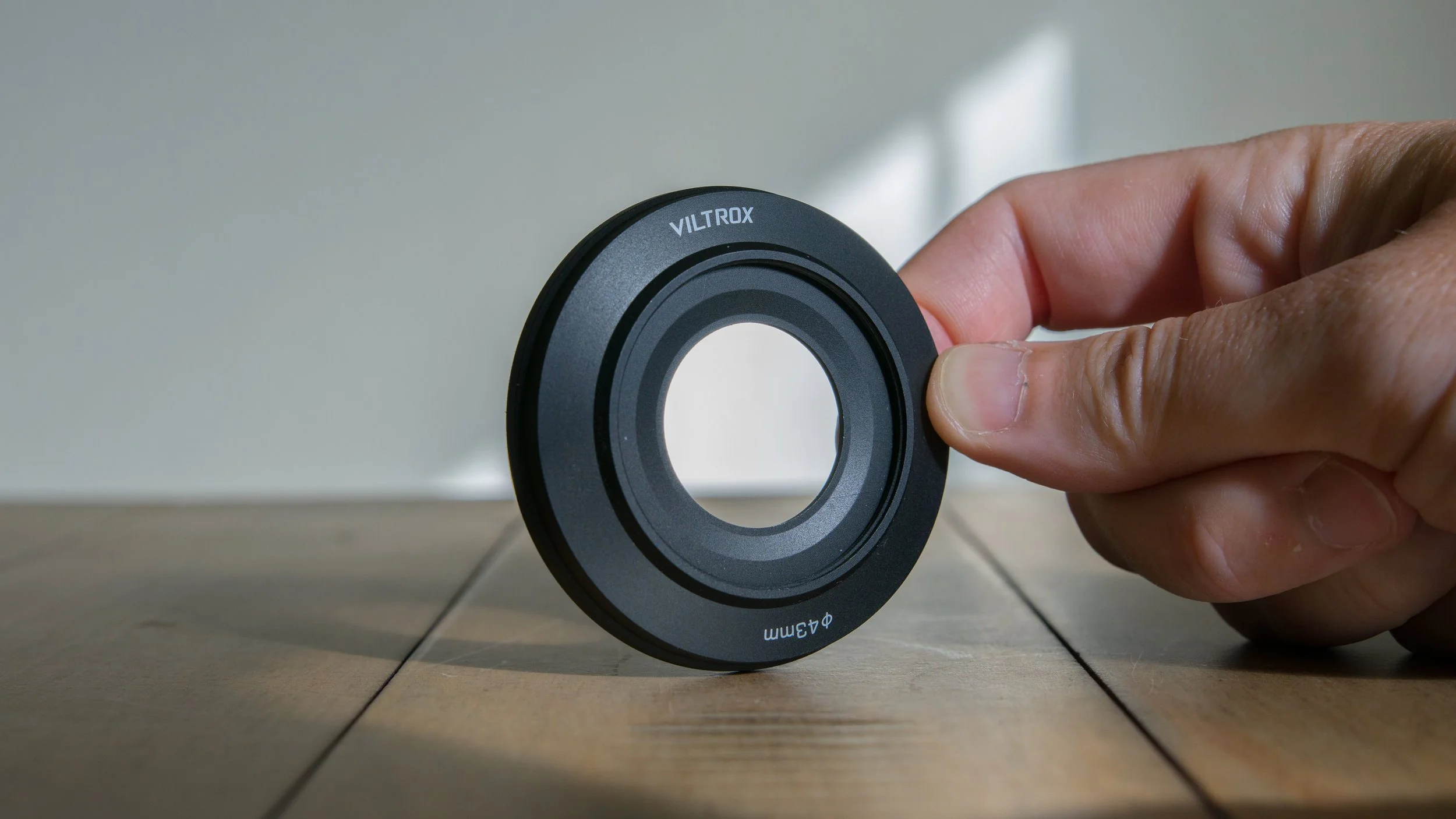
The dome-style hood with inset 43mm filter thread
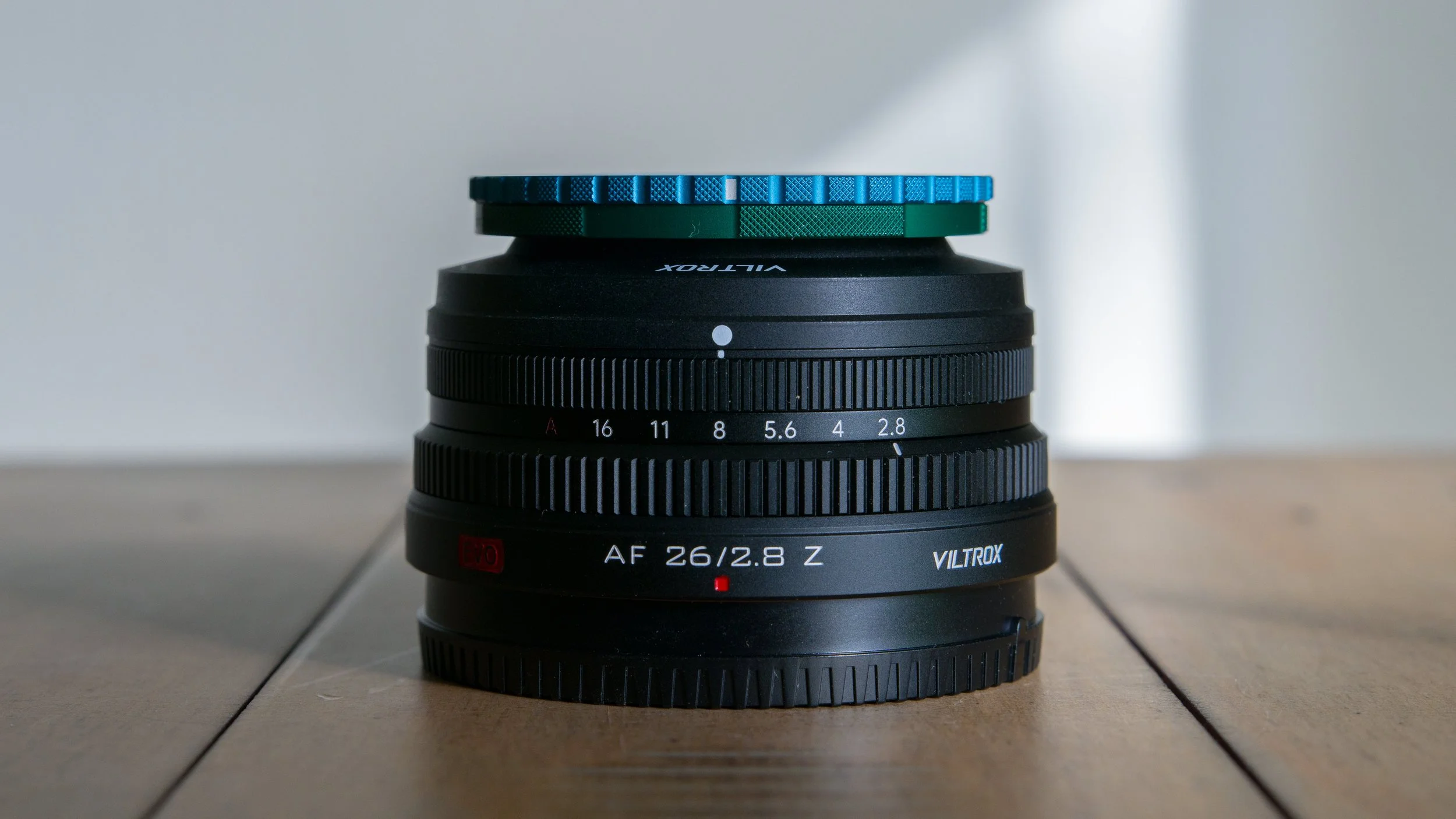
An example of a 52mm to 43mm step down adapter and Maven Filters 52mm CPL mounted into the 26 EVO’s lens hood
Secondly, we have a magnetic lens hood. While the cool factor is certainly present when the lens is stock, the novelty of this design disappears once you add a step down ring and filter; once the step down ring is installed, you can no longer utilize the magnetic hood, further degrading the overall experience. You can use the magnetic lens cap regardless of having the hood mounted or not.
Build quality verdict: We are left with a bit of an odd duck of a lens here…while it has the EVO badge (in red instead of silver, oddly), it ends up feeling like something beneath the quality of the EVO line we have come to expect from a control surface handling perspective. That said, the build quality and metal build heft in hand feel assured with tight tolerances, just as the rest of the EVO line, and its relative light weight is appreciate when mounted on my Zf. In many ways, the 26 EVO feels like it exists as an apology for the oversights of the 28/4.5 Chip lens by providing better optics, an aperture ring, and filter support in a similarly sized package. The way in which Viltrox engineered these additions, however, just fall flat for me as someone that enjoys the rest of the EVO line, and these touches feel much less considered here on the 26 EVO.
Autofocus Performance
Not surprisingly, we have the slowest focusing EVO to date, mostly due to the physical small size of the lens, hamstringing what type of shooting is ultimately possible. I have said that I normally use my other EVO lenses in AF-S for maximum accuracy, and that holds true here as well. Using this lens in AF-C is a bit of a noisy affair, as the gear-type stepper motors are louder than anything else in the EVO line.
I have noted that the EVO line tends to hunt in middling light over ISO 1000 on Nikon Z, and that is accurate here as well. The lens will essentially pulse back and forth as it tries to narrow in on an area of contrast. I have seen a number of false positives here, so care must be taken in darker environments, causing me to overshoot to ensure I get at least one keeper.
This is not a lens I would ever consider for subjects moving quickly towards or away from camera. It is clearly designed for more lifestyle AF-S shooting, walkabouts, and considered shots of posed people (though 26mm can be a bit tricky for portraits).
I would also not shoot autofocus video with it using the onboard mic as the stepper motor noise will be audible.
For reference, my lens shipped with FW 1.03 and FW 1.04 became available only days before this article went live. I will update this article if FW 1.04 or a future firmware improves the pulsing/hunting above ISO 1000.
Autofocus performance verdict: Ultimately middling autofocus outside of shooting in the best light, and false positives can lead to overshooting to ensure getting at least one sharply focused keeper. Focus motors are louder than others in the EVO line, and > ISO 1000 focus pulsing is present here as it is on all EVO lenses for Z.
Image Quality
Here is the meat of the 26 EVO, and why you might consider it.
Once you move past the strange interfaces, the novelty features, and the autofocus that leaves considerable room for improvement, you are left with optics that consistently surprise for a lens this size.
Color rendering is lovely, sharpness is admirable, and the few optical shortfalls that are present due to the small size are helped by a solid embedded lens profile that corrects for both distortion and vignette. Because the lens correction profile is built into the lens, your straight out of camera JPEGs will have these corrections applied by default, as well as having them available in Lightroom for RAW files. Note: if you are shooting on Sony, you can download the LR correction profiles here.
Below is an example of lens corrections disabled and enabled.


Throughout testing, I was consistently pleased at just how sharp the middle 2/3rds of the frame were…this isn’t just center sharpness like the Nikon Z 26/2.8, but a clarity that extends into the far reaches of the frame, even wide open.
Thanks to the great center sharpness of the 26 EVO, one of the “hidden” use cases I discovered for this lens is using it on an APS-C Nikon Z body for an approximate 40mm field of view. I tested this theory using my Nikon Z9 and putting it in DX mode, emulating the field of view I’d see on a Z fc, Z30, Z50, or Z50ii. I was really surprised to see the images held up from a detail and sharpness perspective, with results likely being better on actual Z APS-C cameras because you will gain a few megapixels and a bit of extra sharpness vs the DX mode on my Z9.
Below is an example of the FX 26mm field of view, and then the DX 40mm field of view from the same vantage point.



A 19mp image taken on the Z9 in DX mode, emulating a 40mm field of view

Another 19mp DX shot showing good detail retention and providing a tighter POV
The 26 EVO tends to render a fairly neutral scene in terms of contrast and saturation, and I found that I often added both in post to get to the look I wanted in naturally lit outdoor shots. Below is a comparison of a Camera Standard SOOC JPEG and subtly processed RAW file to demonstrate.


Overall, I have been impressed with edge to edge sharpness for such a small lens, and by f8 the edges are as sharp as I would ever want or expect from a pancake, all with very little fringing.

Excellent clarity in small details at the edges of the frame at f8
Despite being “only” f2.8, there is bokeh to be found wide open at shorter working distances. Luckily, this lens has a deeper magnification than all of the other EVO lenses, allowing you to get up close to subjects and further soften the background. Where some lenses would tend to lose clarity up wide open, the 26 EVO retains its excellent center sharpness, giving me no pause when shooting centered subjects at f2.8.

An example of wide open bokeh at arms-length
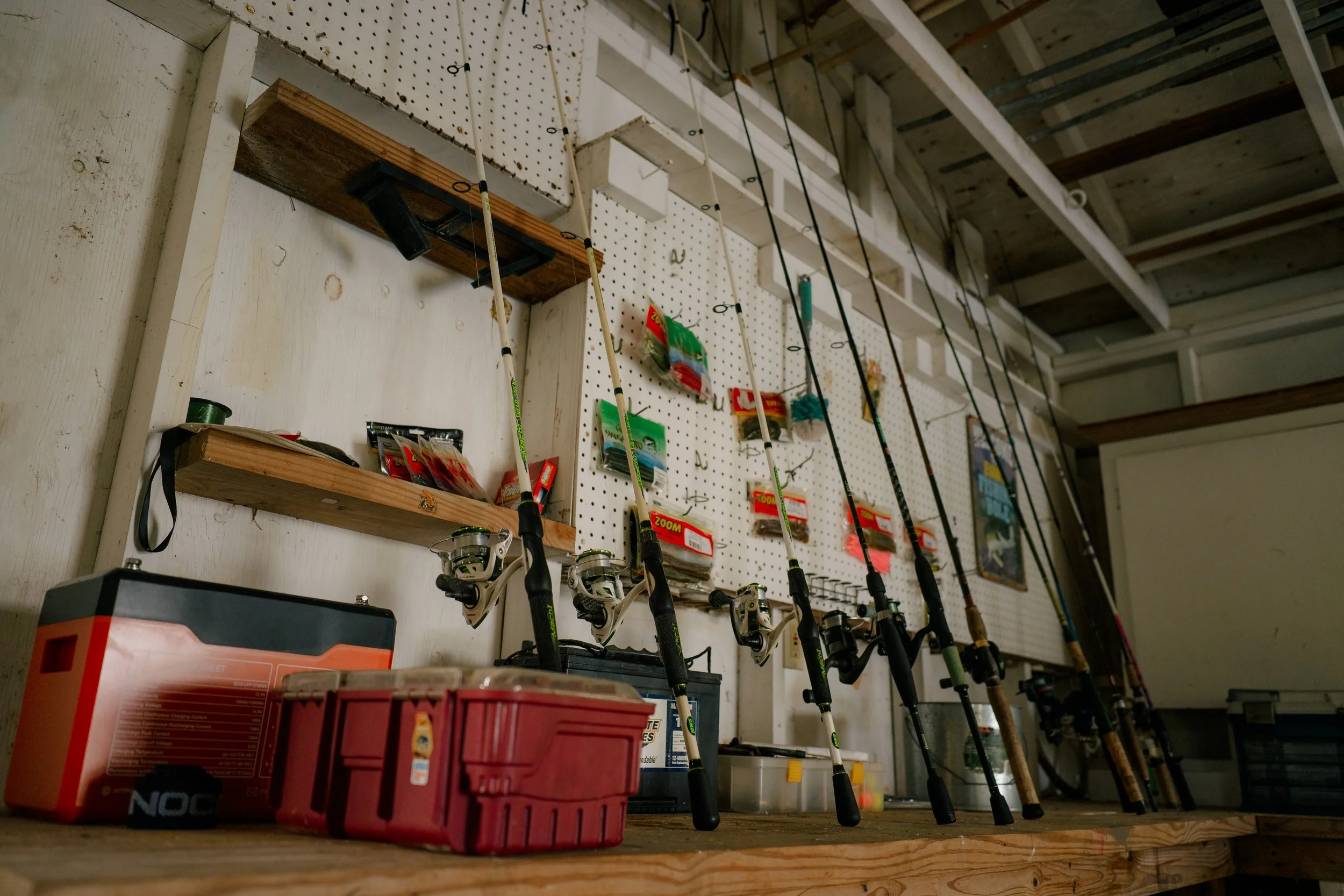
At a bit longer working distance, the bokeh falloff is natural, subtle, and pleasing wide open
When inspecting specular-type bokeh, we see admirably round bokeh balls at f/2.8 that only get rounder as we stop down. There is a distinct lack of swirl and cats eye, instead getting a bit of a colored outline.

The 26 EVO doesn’t leap off the screen as a “character” lens thanks to its well controlled bokeh ball shape wide open

A close inspection of bokeh balls at frame’s edge reveals nice shapes with a bit of colored fringed outlines
In my early shooting, chromatic aberration is very well controlled, with only a bit of fringing along bright lines (seemingly more green background fringing than purple foreground fringing). Viltrox have not advertised the 26 EVO as being apochromatic like the 35 and 55, but some part of the optical formula in the 26 EVO is controlling CA admirably.
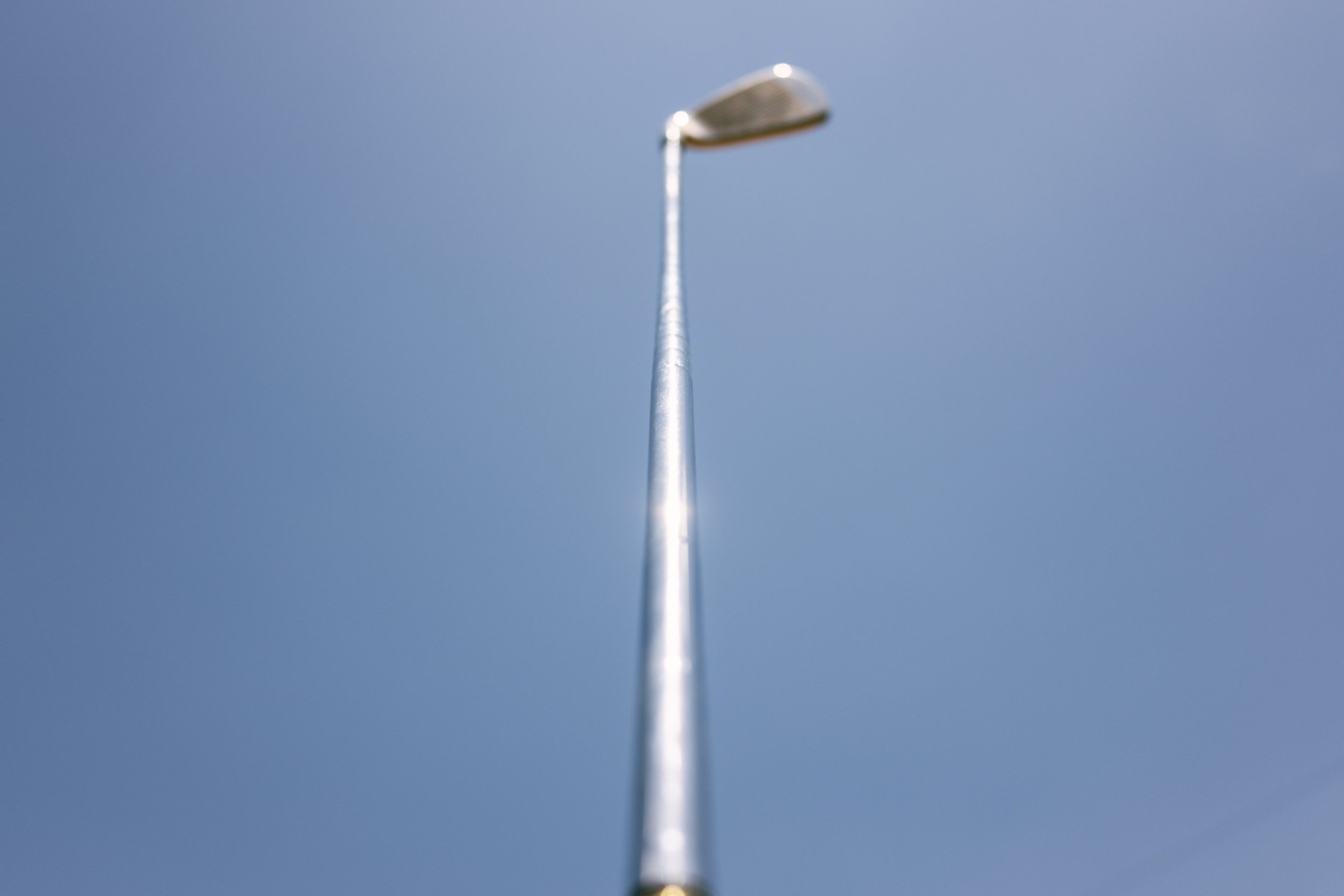
Getting CA to appear on the 26 EVO was a real challenge and is even further diminished when using a CPL (not installed for this shot)
Flare tends to be decently controlled in all but harsh sun-in-frame shots, a huge and welcome improvement over the 28 Chip as well. Where you simply cannot use the Chip if the sun is in front of you, the 26 EVO does well to prevent ghosting and veiling flare in tough head-on light if the sun is mostly obstructed.

An example of the 26 EVO controlling flare well where the Chip would struggle mightily
While I could wring some veiling flare out of the 26 EVO, it is very much improved from the 28 Chip, and ultimately somewhat worse than the bigger EVO trio.

The garish rainbow patterns from the 28 Chip’s veiling flare are absent on the 26 EVO, and the overall veil is smaller
Sunstars are nothing to talk about, and I wouldn’t go out of my way to generate them on the 26 EVO while taking the sharpness hit from diffraction in the process.

f16 sunstar on the 26 EVO
Image quality verdict: The 26 EVO pulls a mediocre showing out of the fire at the very end, buoyed by what matters most…pure image quality all the way down to wide open. Excellent center 2/3rds sharpness allows for use on APS-C cameras to provide satisfying shots at a 40mm-equivalent field of view. Results are consistent, close focus allows for a decent amount of subject separation, and f8 sharpness gives a crisp image edge to edge. Good bokeh shape control prevents the “character” label from defining the rendering, while a very nice transition zone prevents the 26 EVO from being labeled as “clinical”. Chromatic aberration is handled very well for a pancake this size. Overall, the lens walks a tightrope of rendering with aplomb, its images providing the most compelling reason to shoot with it, as it should be. At no point did I feel like the image quality fell apart during editing and the lens easily resolves up to 45mp sensors - impressive for a lens of this size and price.
Conclusion
The 26 EVO is a considered option for someone looking to travel very light and capture pleasing images while doing so. This is clearly a piece of glass leaning hard into the “lifestyle” genre, while the other 3 EVO options are marketed more for advanced-amateur to professional level photography. As an EVO enthusiast, I have found this shift disappointing, especially when it comes to handling the lens and having to live with some of the odd design choices. That said, the 26 EVO has it where it counts, allowing you to make beautiful and pleasing imagery with ease, provided your subjects are on the slowish to still side.
Nikon, of course, has a somewhat well regarded 26mm f/2.8 lens themselves, one without the filter thread oddity, but you will pay nearly 70% more for the first party option that has its own set of strange design choices (external focusing, strange lens cap, and a weak edge to edge optic). For those looking to capture excellent lifestyle and walkabout shots on a budget, the Viltrox is a compelling option.
One thing I know for sure: skip the 28/4.5 Chip, and get the 26 EVO instead…the increase in optical quality and filter support are worth the extra price.
For APS-C shooters in the Nikon Z system who want a “natural” focal length, using this FX lens on your DX body for a near 40mm experience may just be one of the best use cases for this lens, thanks to its excellent center sharpness and moderate vignette. This lens becomes a no-brainer purchase if you routinely shoot a Z fc, Z30 or Z50 style body and want a very small/light lens with great IQ.
At the end of the day, the 26 EVO is a somewhat flawed lens with image quality that ultimately redeems it. If you are looking to maximize your images on a budget, it’s an obvious contender in a not-so-crowded corner of the market.
As always, I appreciate you reading my reviews and first looks. If you found this article helpful, please consider buying me a coffee with the button below so I can fuel up and bring you more content like this.
$299 USD MSRP, use coupon code “SCOTTTUCKER” for extra 5% off at Viltrox - click here to shop at Viltrox — B&H — Amazon
-Scott