A big release for Viltrox, and an even bigger lens among its peers
$829 USD MSRP, $596 until November 30th at Viltrox’s online store when you use coupon code SCOTTTUCKER - click here to shop at Viltrox - Amazon - B&H
Related articles:
Viltrox AF 26mm f2.8 EVO review
Viltrox AF 28mm f4.5 Chip review
Viltrox AF 35mm f1.8 EVO review
Viltrox AF 55mm f1.8 EVO review
Disclosure: this lens was provided free of charge from Viltrox in exchange for my thoughts on it, and they have not had access to this review before publication. This article contains affiliate links for this lens and other accessories.
Viltrox has had a full frame 35mm f1.4 size hole in their Pro lineup for nearly a year. Despite the 50/1.4 and 85/1.4 Pro lens releases in late 2025/early 2026, there has been a crucial missing part of the trio ever since.
That ends now.
Viltrox has dropped one of their most anticipated lenses in the form of the AF 35mm F1.4 Pro. While anyone who has any experience with the 50 or 85 Pro will immediately feel at home with the 35 Pro, the 35mm market has only expanded in the last year and Viltrox faces competition from many different angles.
Does the 35 Pro differentiate itself enough to stand tall? Read on.
The Lens
Price
$829 USD MSRP, $596 until November 30th at Viltrox’s online store when you use coupon code SCOTTTUCKER - click here to shop at Viltrox - Amazon - B&H
Tech Specs
780g - 77mm filter thread - 11 blade aperture - 11.8” Minimum Focus Distance - 0.18x magnification - HyperVCM voice coil autofocus motors - f16 minimum aperture - AF/MF switch - Aperture declick switch - Custom Fn button - Dedicated aperture ring - Bayonet-style hood - USB-C port inside the mount for updating firmware - Rubber gasket at mount
Build Quality and Handling
Viltrox laid the blueprint for the Pro line with the 50 and 85 Pro lenses and the 35 Pro follows in their footsteps nearly identically. In hand, these lenses are indistinguishable. The control surfaces and features are 1:1 and in are all located in the same spots on each lens barrel. The earlier Pros’ metal build, declickable aperture ring, custom function button, AF/MF toggle, and weather sealing are all here, and all lenses feature a 77mm filter thread for ease of filter sharing while on a job. While the hoods are interchangeable, the 35 offers a petal-type design (like the 50) while the 85 has a fully round design, so best to use each’s standard hood.
There is a very nice distance and detent between the A and f16 settings, preventing accidental movement while in A mode. I wish Viltrox would extend this design to every aperture-ring-having lens they make!
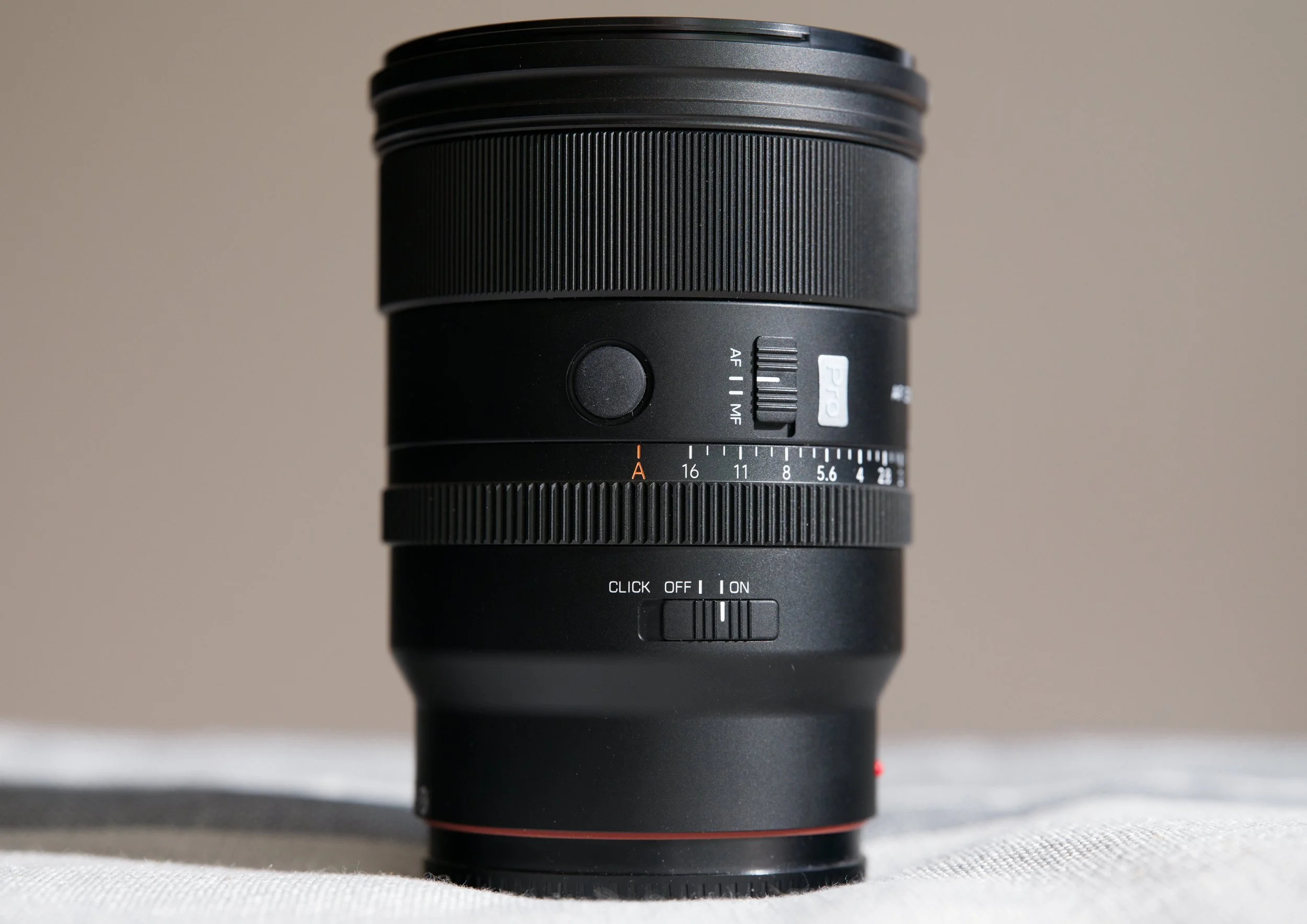
The 35 Pro inherits every physical control from the 50 and 85 Pro
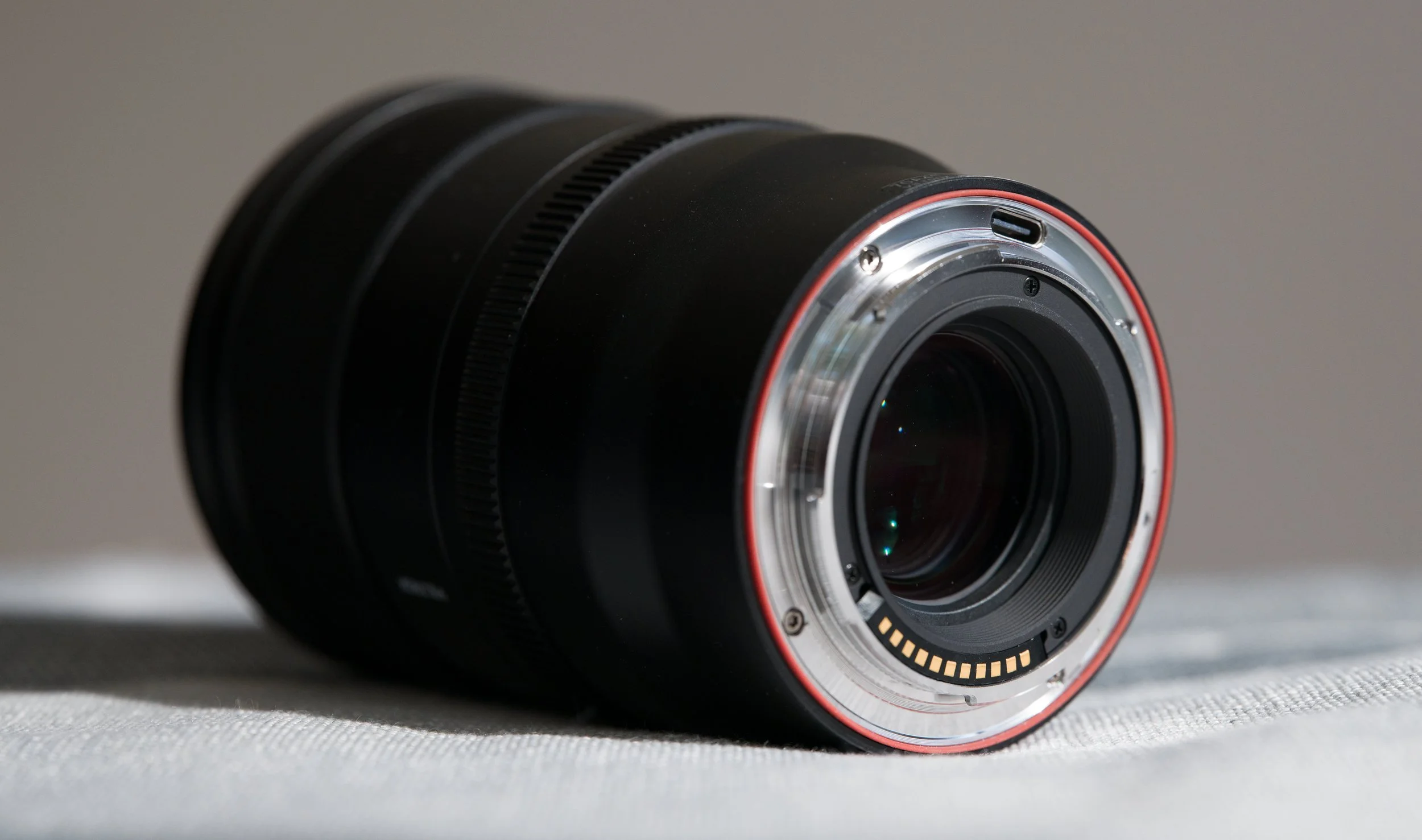
Familiar Viltrox features like the orange mount gasket and internal USB-C port are here on the 35 Pro as well
My main first impression of the 35 Pro is that it is BIG, and not particularly lightweight. Historically, 35/1.4 designs have been all over the map. The main competitors to the 35 Pro on Z mount are the Sirui 35/1.4 Aurora (500g) and Nikkor 35/1.4 (415g). If you’re willing to lose 2/3rds of a stop of light, The Viltrox 35/1.8 EVO comes in at a downright ridiculously light 350g, less than half the weight of the 35 Pro.
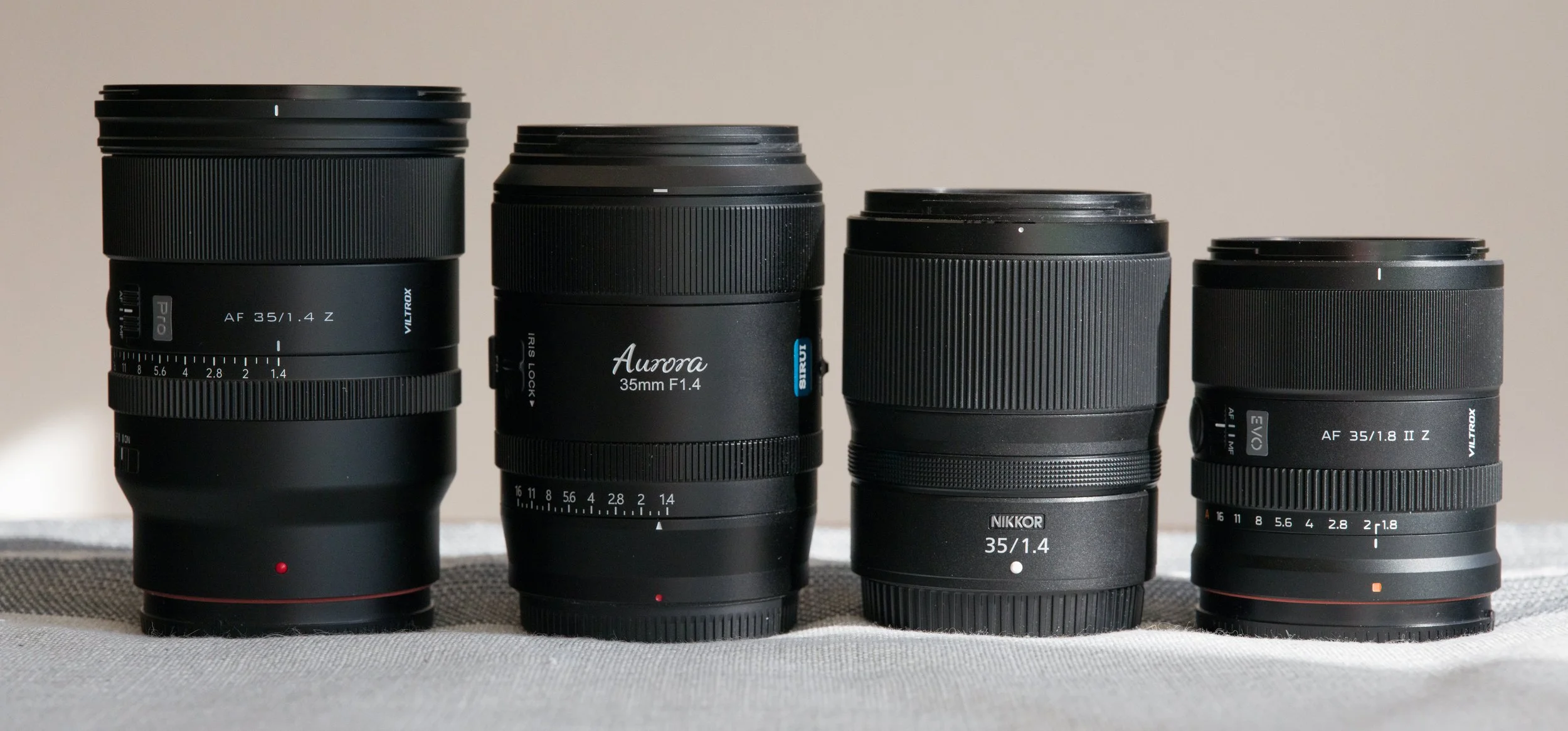
Viltrox 35 Pro, Sirui 35 Aurora, Nikkor 35, and Viltrox 35 EVO
If you have any recent experience with the above lenses, the 35 Pro’s size and weight will likely be the first thing you notice as well. If you already shoot with the 50 or 85 Pro, however, these lenses will feel identical in hand.
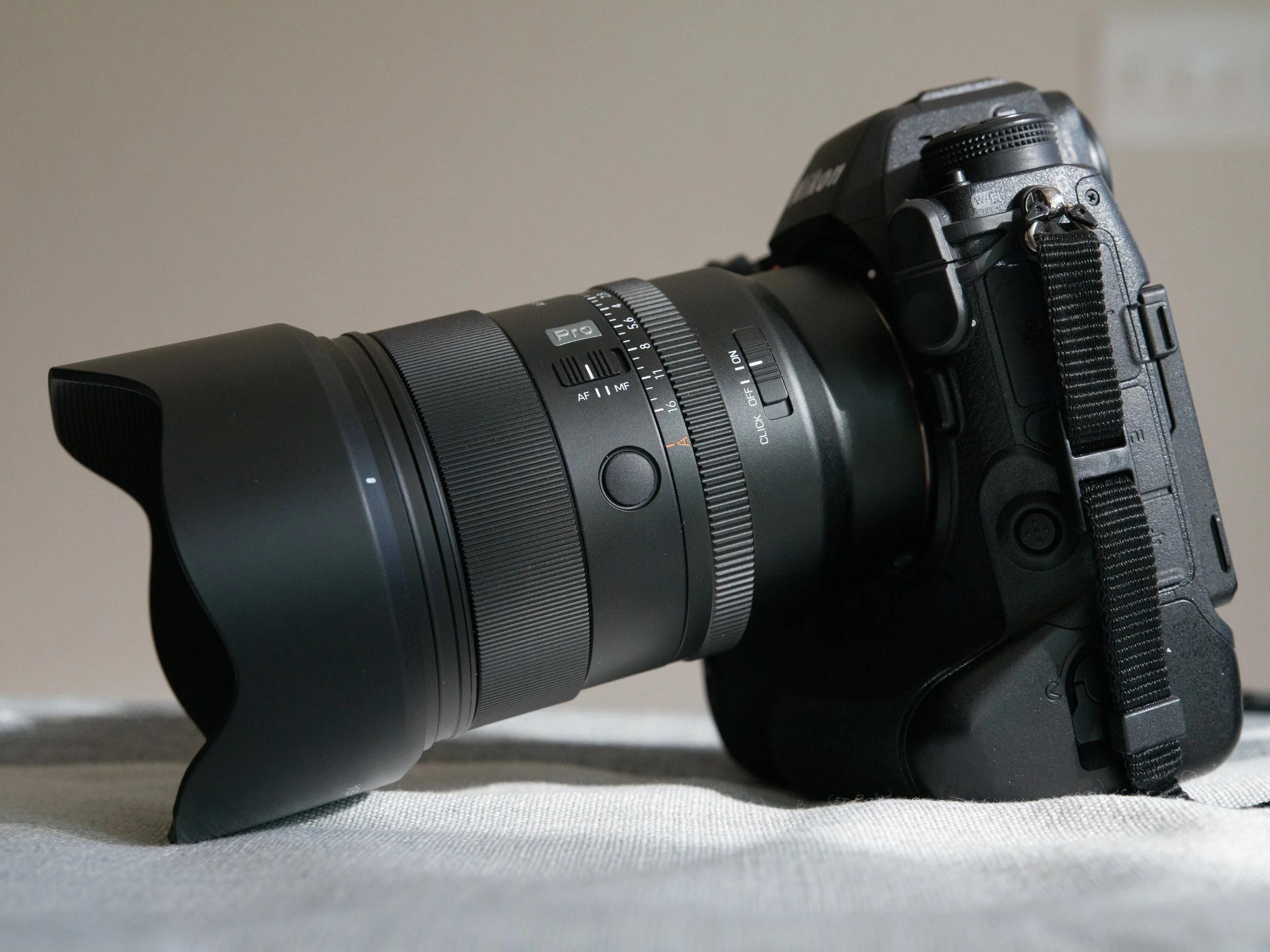
The 35 Pro mounted on a Z9. Once the hood is attached, the 35 Pro starts to feel quite long and front heavy.
All of the lens’s control surfaces feel well dampened with tight tolerances. There is no slop to speak of when it comes to the 35 Pro, which aligns with my experience with many other Viltrox lenses now.
The 35 Pro has the same floating element design of the 50 and 85 Pro. This manifests as a solid “thunk” as you tip the lens back and forth when it’s either off the camera or attached to a powered off camera. As soon as the camera is powered on, the voice coil motors hold this floating element in place. If you look through the rear element, you can see this bundle of glass moving back and forth as you move the lens.
While I’m sure that Viltrox has tested the durability of this design extensively, the loudness and heft of this “thunk” can be off putting in hand especially if your camera is bouncing around on your hip while powered off. Couple this with a camera that has a floating IBIS unit while powered off and your camera setup will be rattling around to a disconcerting degree as you move around.
Viltrox Pro lenses have a slicker barrel finish than their EVO line of lenses - on hot days where I was sweating while shooting, the 35 Pro became more slippery than I have become accustomed compared to the EVO lenses in similar conditions. The EVO line has just a bit more texture in the finish that lends a bit more confidence to their handling. I wish the Pro line had this texture as well, as the Pros tend to be more unwieldy when mounting and unmounting from the camera due to their size and weight.
While I have had some issues with previous Viltrox hoods, the 35 Pro hood mounts quickly and confidently. Note that if you are in the habit of setting your camera/lens face down (where the hood is making contact with the ground or surface) like I am, the petal design will introduce some wobble, so use caution. For this reason, I tend to prefer fully round hoods like the 85 Pro’s for jobs where I am moving around at ground level and setting my camera down frequently.
Build quality verdict: I think most 50 and 85 Pro shooters hoped the 35 Pro would be a 1:1 copy in terms of build quality, and Viltrox delivered exactly that. Nearly identical physical designs and control surface layouts ensures that working pros will feel confident handling either lens in the field, and matching filter thread sizes make sharing filters a breeze. My only quibbles are personal, wishing for a bit more texture on the barrel finish, or a round hood instead of petal design. There is nothing that stands out as a negative to me regarding the 35 Pro’s build quality.
Autofocus Performance
Preface: most of my testing was against Firmware 1.03 - I updated to 1.04 on 10/21 and used that until launch on 10/29. I did not notice significant improvements between these versions regarding my observations below.
As I shoot more Viltrox lenses, I am seeing a trend that is directly counter to first-party Nikon lenses: where Nikon glass focuses fastest and most accurately in AF-S, Viltrox lenses thrive in AF-C. Over the last year I have submitted feedback about some AF-S oddities to Viltrox and am frustrated to see them still present on a new $800+ “professional” lens. For my particular shooting style, I prefer AF-S in most situations, so it’s possible I’m more sensitive to these quirks than those that have cameras that live in AF-C.
The good news: the 35 Pro’s HyperVCM focus motors operate nearly silently even in AF-C, delivering fast and accurate subject detection that you would expect from a professional lens. I experienced very little focus racking, breathing, or jumping to a background object while using AF-C. Results were consistently good.
Now, the unfortunate news: once the camera is in AF-S, the 35 Pro slows down by a significant margin. There have been instances where I was shooting street midday in the sun with AF-S and missed shots because the lens decided to fully rack focus where no first party Nikon lens would have. I have more than once simply lowered the camera in confusion at how a lens with such good AF motors could get so confused by a simple subject in good light.
After the light dims, we start to see another quirk. One of the major factors in low light that slows down AF-S shooting with the 35 Pro is how the camera utilizes the AF assistance lamp. In my tests while shooting AF-S, the lamp stays on for nearly twice as long as it does in identical conditions with the Nikon 35/1.4. This delay before confirmed focus acquisition can mean the difference between getting the shot and missing the shot. This only gets worse at higher ISO values, as the Nikon lens continues to focus quickly while the 35 Pro has to shine the lamp for longer durations, pulsing and hunting for focus in dim conditions where the Nikon simply doesn’t.
If you have experience with the 26mm or 35mm EVO lenses, I am, at random times, seeing similar AF-S performance with the 35 Pro. Given that the Pro costs twice as these lenses much and has much better autofocus motors, I have ultimately been disappointed with the 35 Pro in AF-S mode as it feels largely unpredictable. There are a variety of shooting conditions where using AF-C isn’t the best choice, and in those situations, you won’t be getting the best of the 35 Pro.
Autofocus performance verdict: Overall, a highly mixed bag. AF-C performance feels like it’s right where it deserves to be for the price point, but still lags a bit behind similar first party lenses. AF-S performance is decidedly NOT up to par or price, and Viltrox needs to sort out their overall AF-S issues on Nikon Z, as these behaviors are now plaguing multiple lines of lenses. Slow AF-S focus confirmation can cost you shots in critical moments in lower light conditions as you wait for the focus assist lamp to turn off, even with the lens wide open at f1.4. Working pros will notice this slow AF-S behavior as light fades during events.
Image Quality
Now that we know the 35 Pro is a hefty lens with some autofocus quirks, it has some ground to make up, and it can only do that by providing us great images. I am happy to say that the 35 Pro delivers here.
As usual, the Nikon Z mount versions of Viltrox lenses come with a correction profile embedded in the lens so that JPEGs are corrected in camera. Lightroom/Capture One can apply or disable these embedded profiles as well. You will have profile correction from day 1 and won’t be waiting on your software to catch up. Other companies could learn a thing or two from Viltrox in this regard!
Below is an example of lens corrections (vignette and distortion) disabled and enabled on the 35 Pro.


One of the first things I tested was midrange bokeh near wide open. While I very much liked the 35 EVO for its small size, its bokeh tends to be both harsh and busy in many situations with distracting elements behind the subject.
Both of these shots below are at f1.8 with the 35 Pro on the left and 35 EVO on the right. You can see the Pro provides a softer bokeh and a more uniform exposure across the frame, where the EVO has something of a hotspot in the middle of the frame that pushes harsh highlights even further.


If we push the background away a bit more we can see some swirl and cat eye character emerge on the 35 Pro.
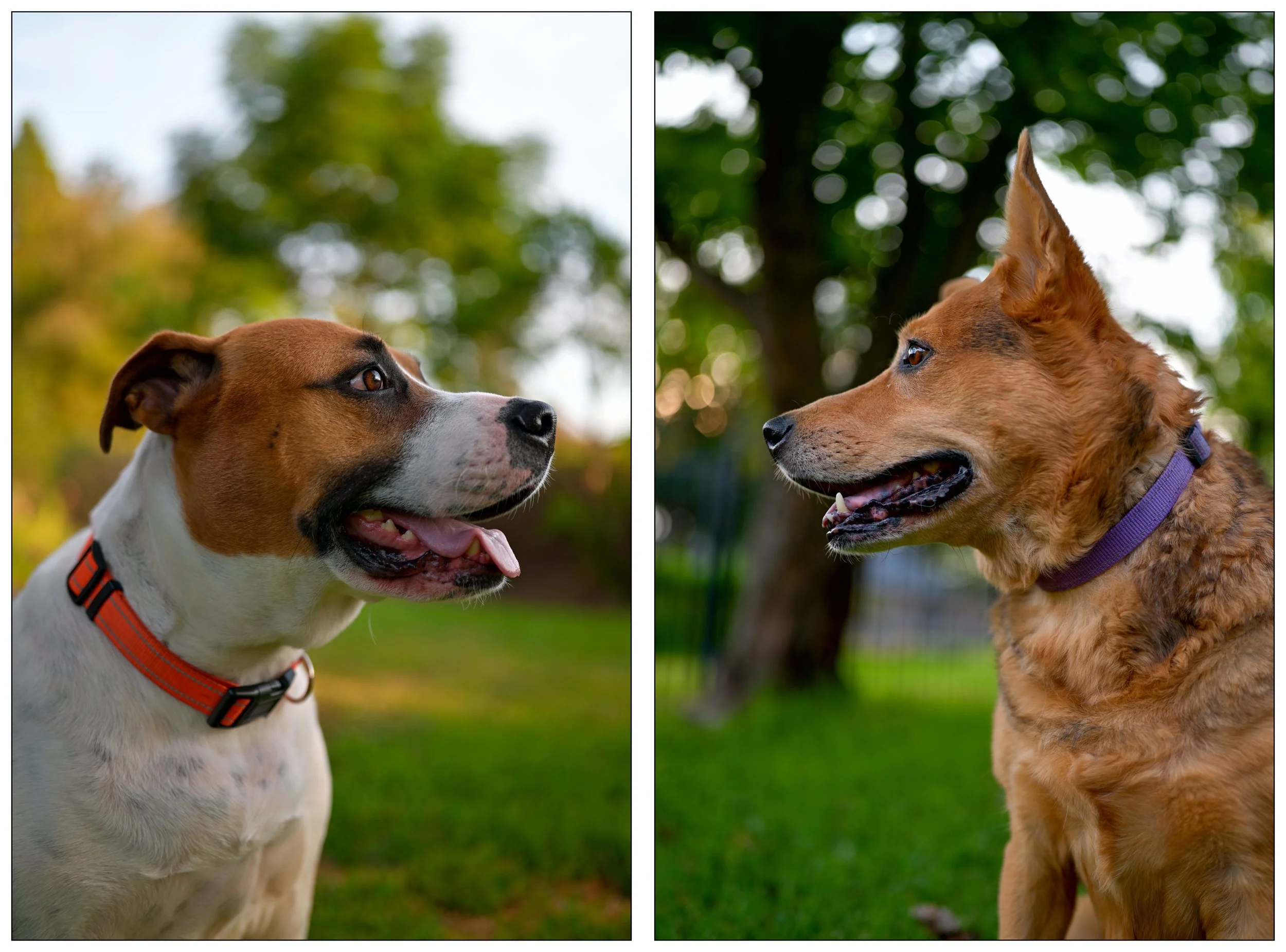
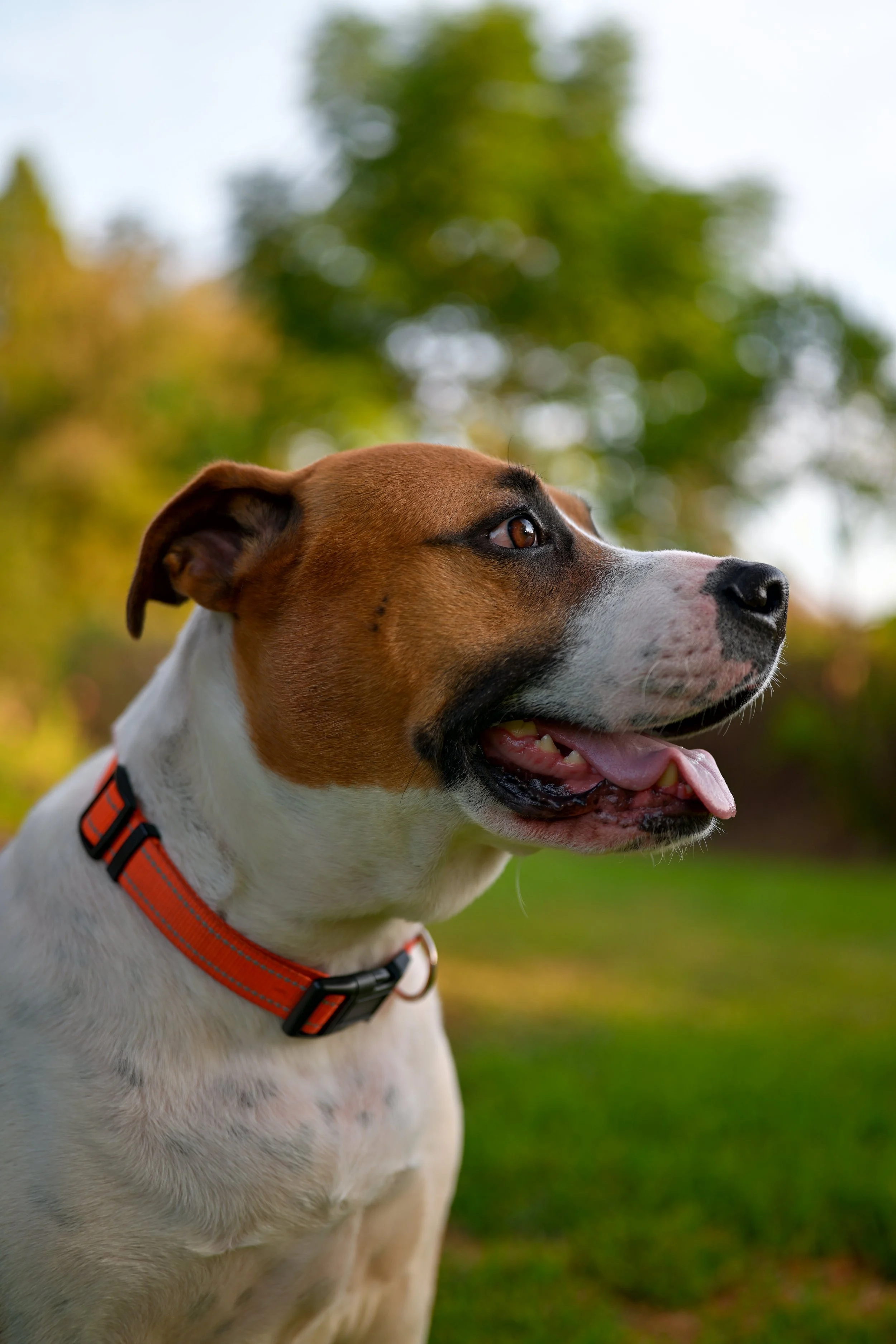
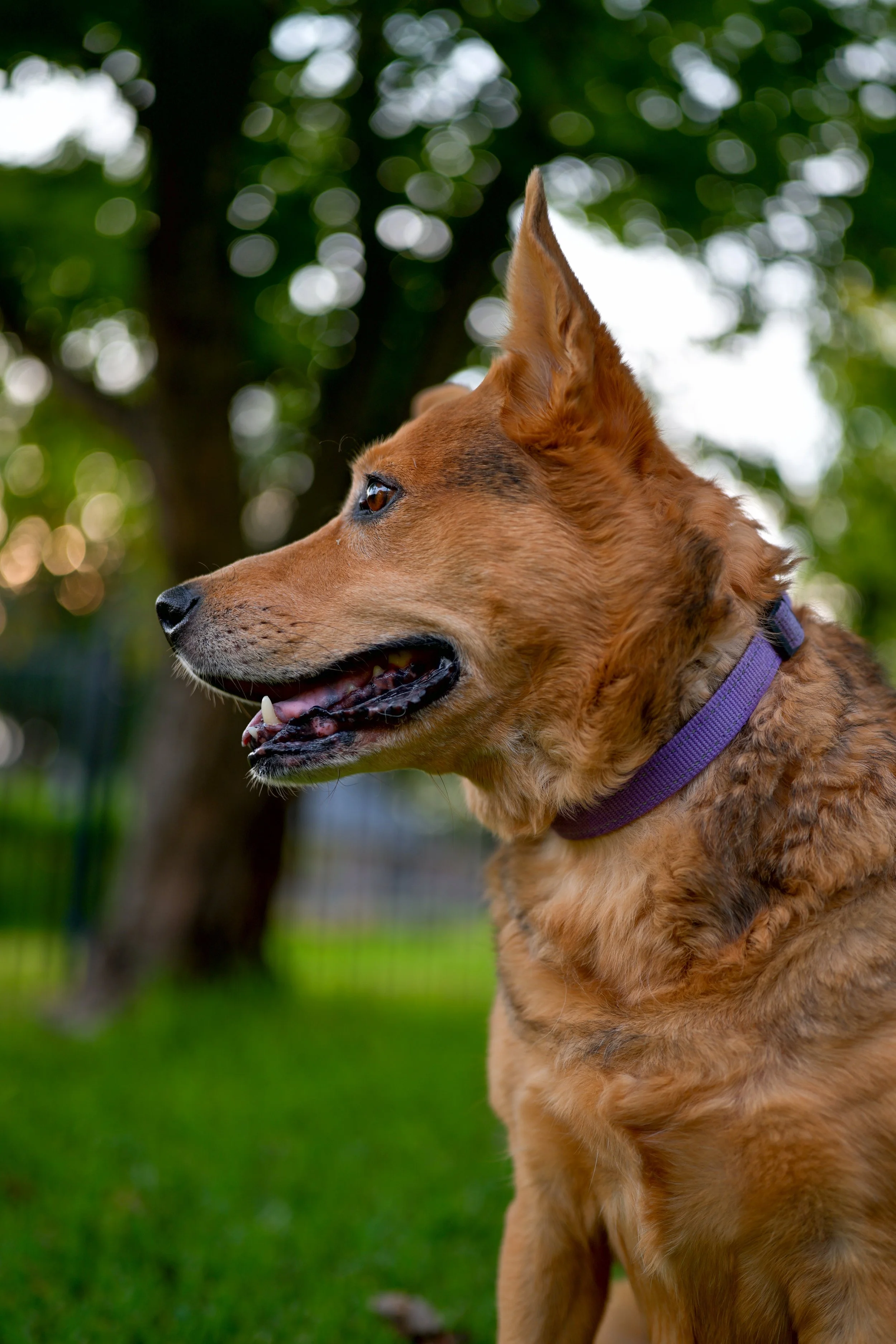
Both shot wide open. Behind Rocky (left), our trees in the distance have mostly round highlights in the center frame bokeh. Behind Tracer (right) with a closer background fence and tree, we see those highlights shift towards cat eye shapes and exhibit some swirl. We see very little ghosting on the lines of the fence.
While the 35 Pro’s 0.18x magnification and nearly 1 foot minimum focus distance are disappointing on paper compared to the industry-leading Sony 35 GM’s excellent 0.26x magnification, the specs are right in line with the Pro’s competition on Z mount in the Nikon 35/1.4 and 35/1.8, both of which have the same 0.18x magnification. At MFD, the Pro’s large f1.4 aperture allows for pleasing, dreamy bokeh while the plane of focus is still quite sharp.

An example of a wide open uncropped shot at minimum focus distance. The 0.18x magnification gets you close, but is still outside of macro-lite territory. Details are still crisp and contrast is good across the frame.
Beyond the quality of bokeh, I was very curious to see how the 35 Pro handles chromatic aberration, having been blown away by the 35 and 55 EVO lenses eliminating CA nearly completely at wide open apertures. I’m happy to report that the 35 Pro does an admirable job here as well, and even though it’s not marketed as an APO lens, its performance is very close to the APO lenses from Viltrox.
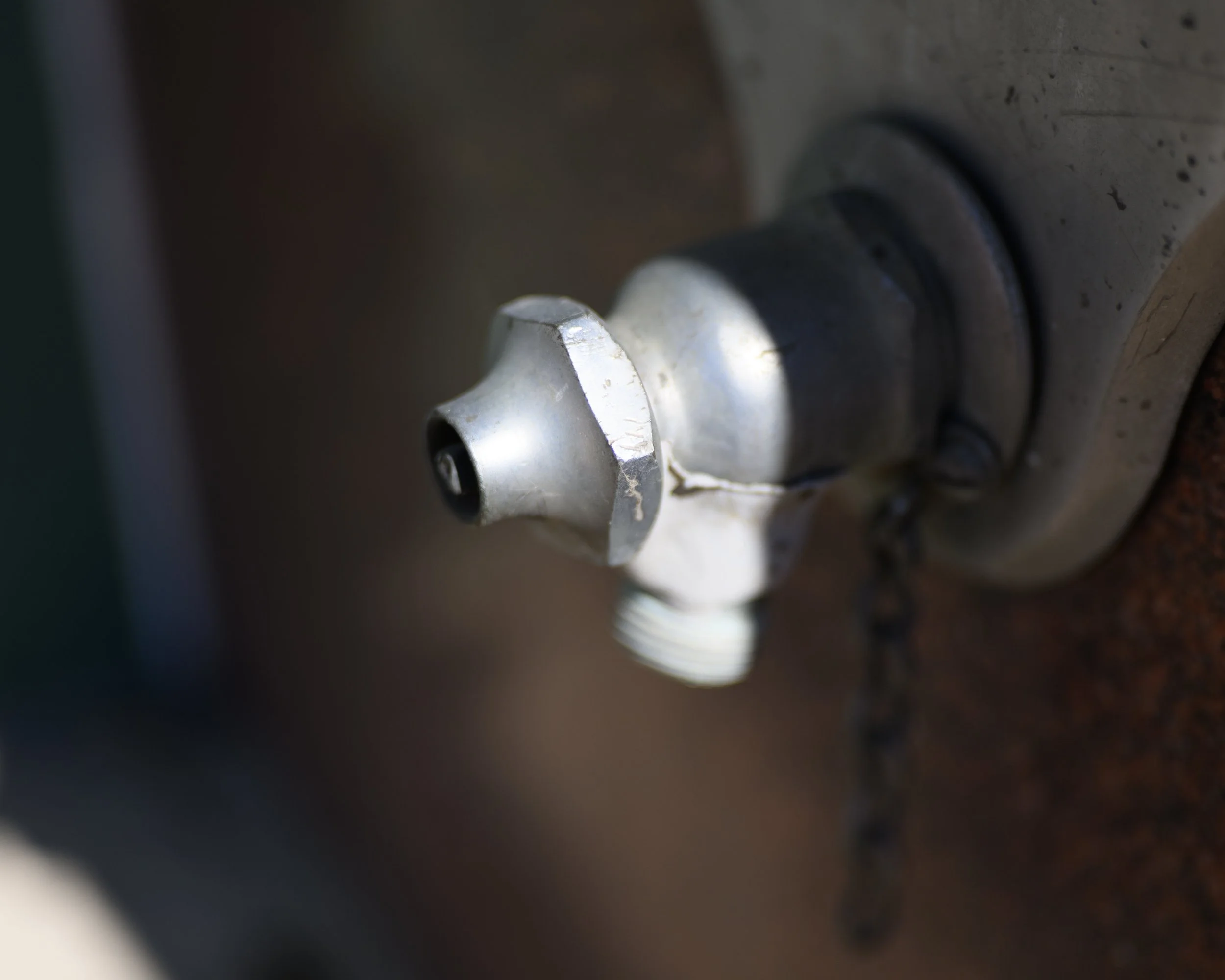
I could never get more than slight green/yellow tinge to manifest in places I’d expect to see chromatic aberration
Over the course of testing, I was surprised to find that while images are sharp, they aren’t necessarily as blisteringly sharp as the 35 EVO, at least not in the same biting way. Where the 35 Pro kept impressing me was with its microcontrast and overall realistic conveyance of texture without stepping into clinical sharpness that can be offputting.
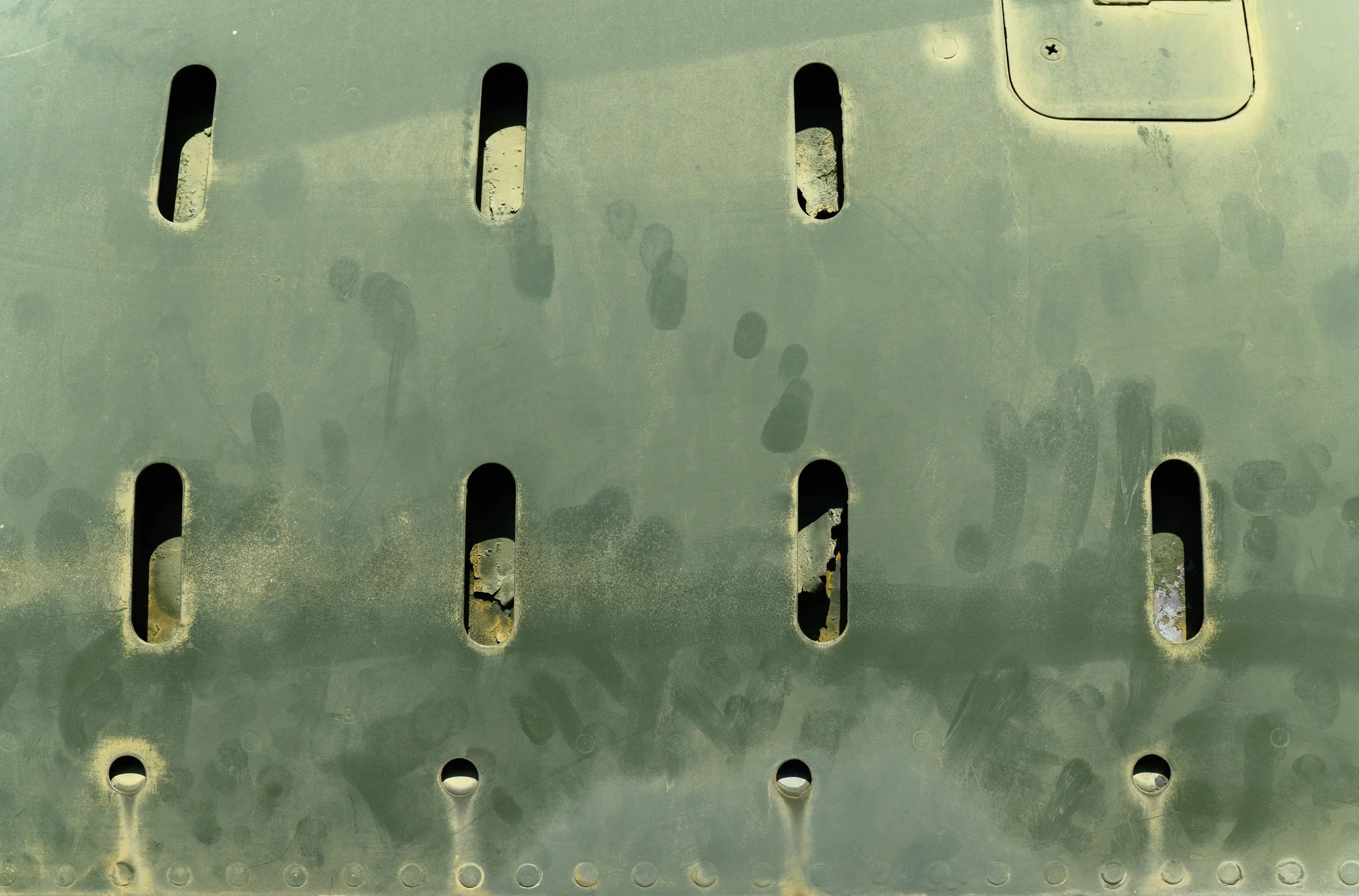
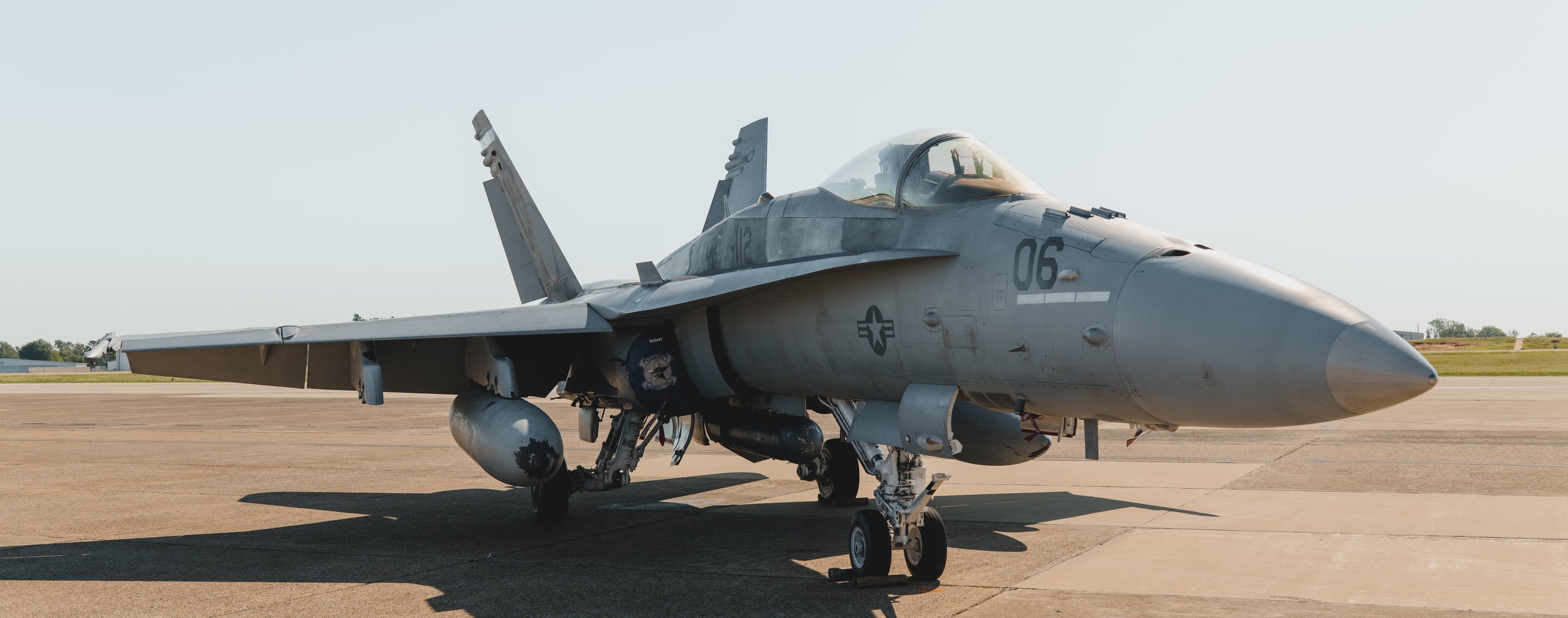
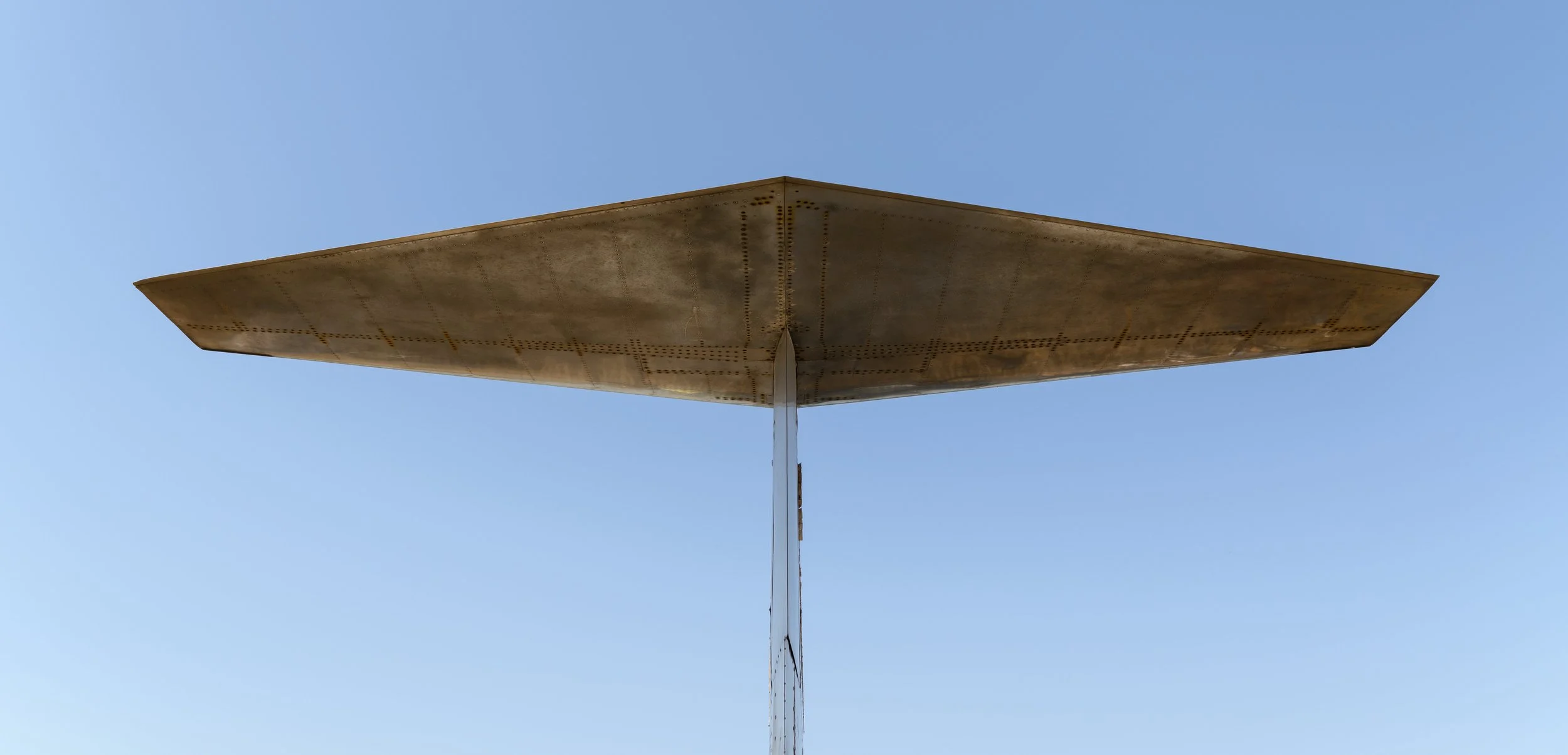
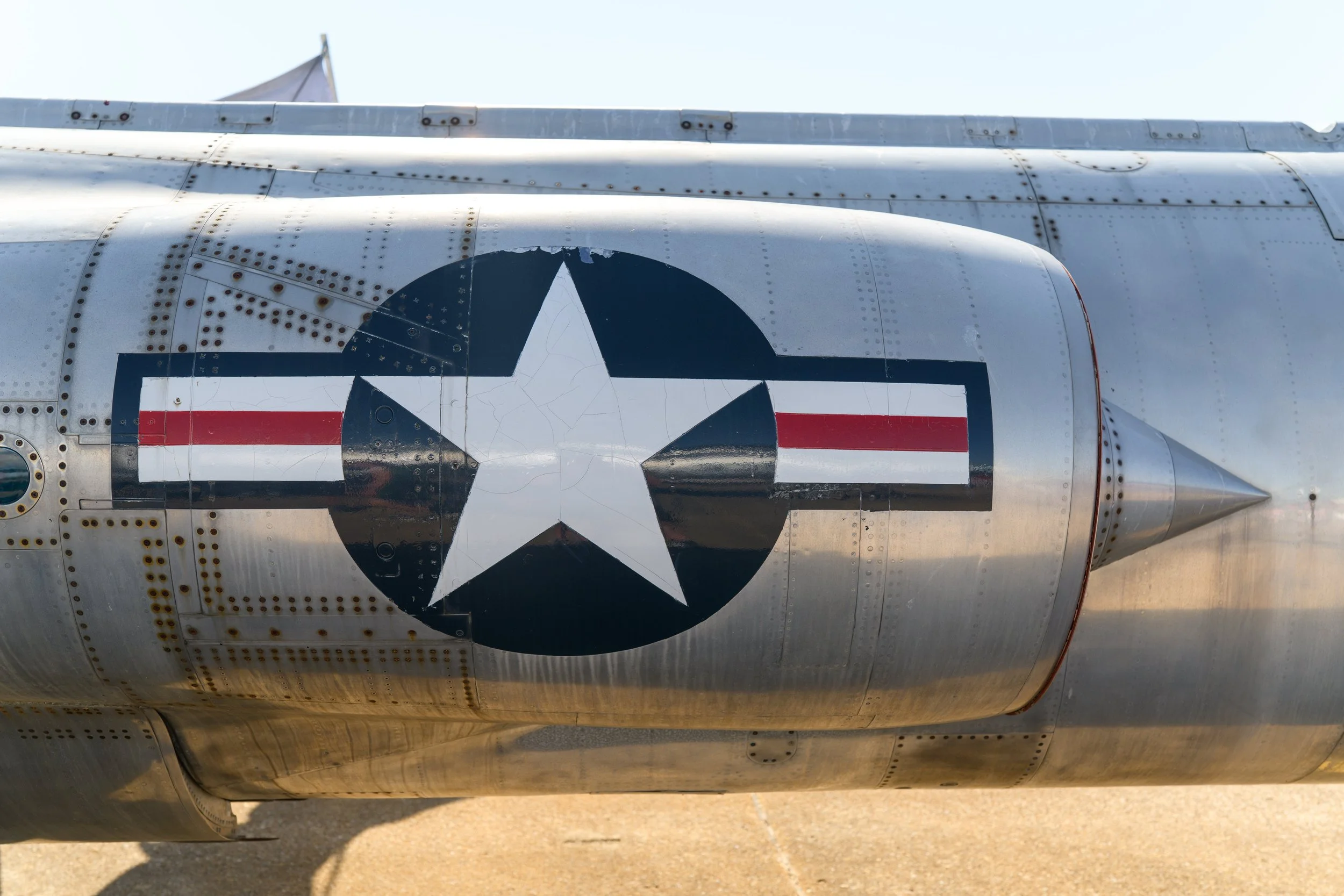
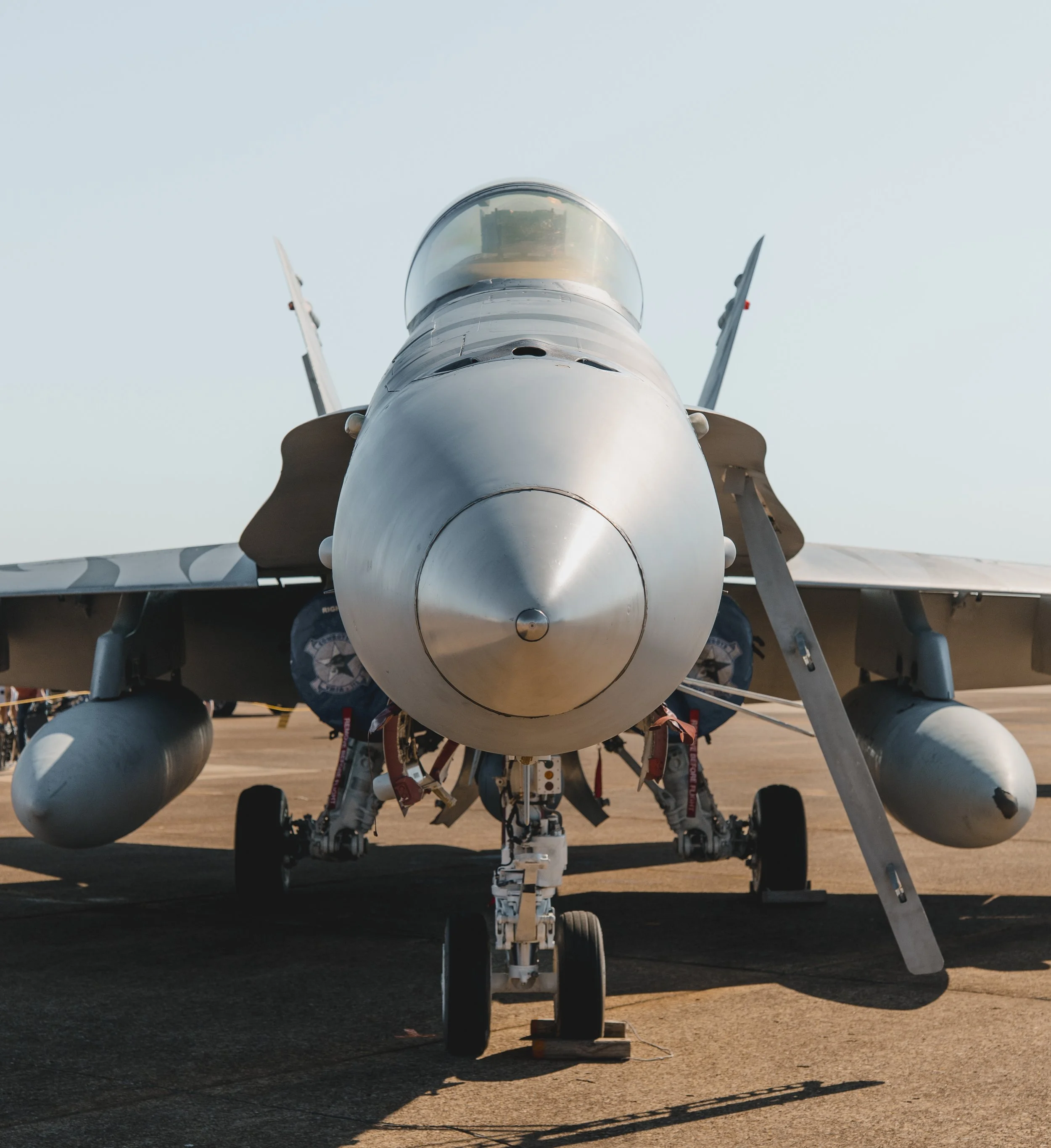
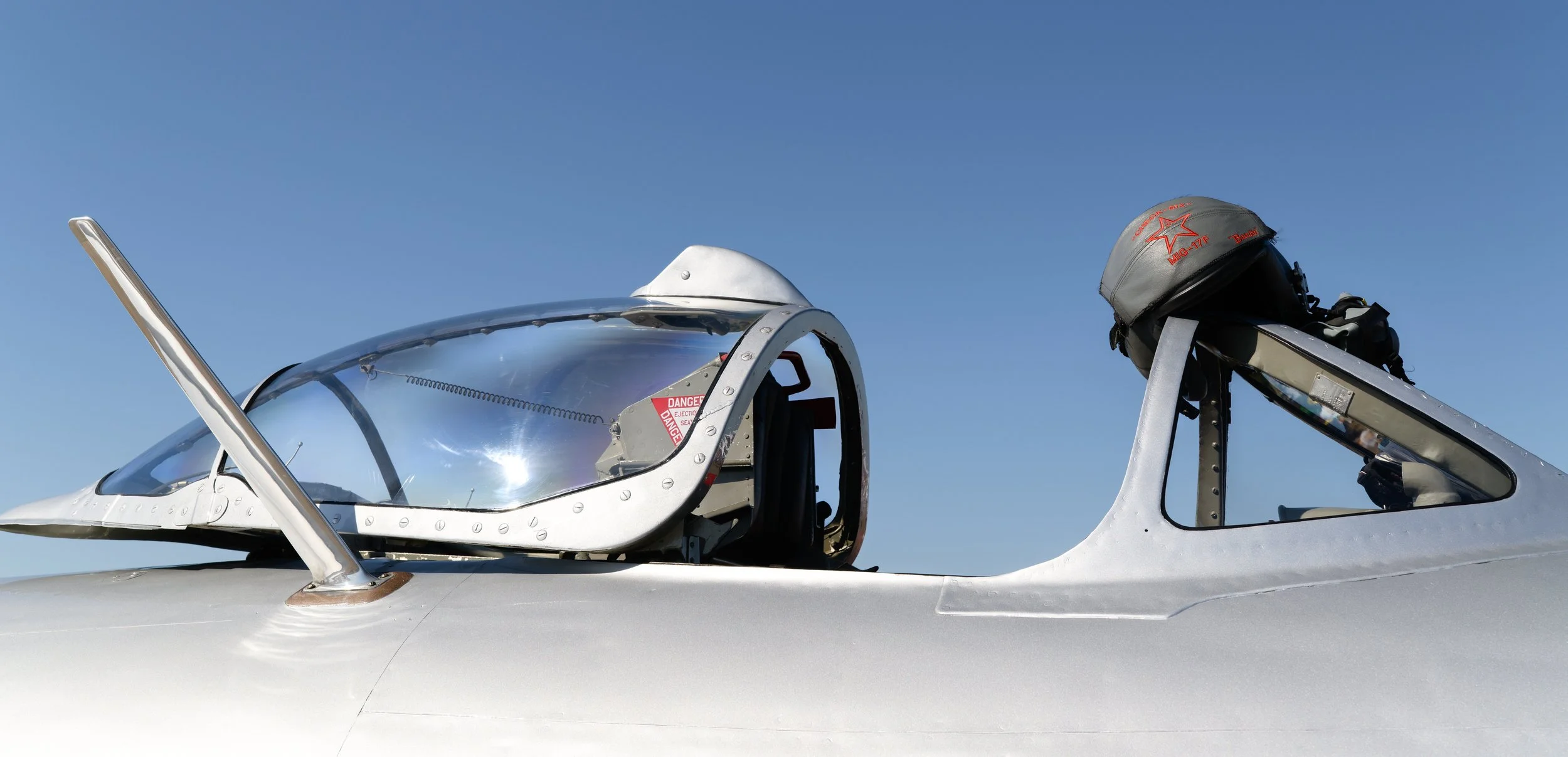
While at an airshow, I used the 35 Pro as my walkabout lens and made a point to go hunting specifically for interesting textures and detail shots of the airplanes on display.
Excellent contrast on the focal point and a very smooth transition into bokeh - great color rendition and even exposure across the frame - you can FEEL the texture of that paint
The 35 Pro captures extremely fine details and does a great job conveying texture with its excellent microcontrast and even-across-the-frame performance
Even in shadow, the contrast holds up to allow for fine details such as the rivets on the underside of this stabilizer
Excellent sharpness and color on what would normally be a chromatic aberration nightmare of a subject when shot at high noon
I love shooting street scenes with 35mm lenses, so that was an obvious use case for the 35 Pro. It became pretty obvious that it’s both a great lens that captures fine details extremely well as well as bigger and heavier for long walks than I’d prefer for street. I had it on my Nikon Z9 so I wouldn’t have to worry about shutter speeds wide open in midday light, and the Z9/35 Pro combo weighs in at roughly 2100g. It took about an hour of walking and carrying this setup to begin to feel the weight. This would be similar to what I’d use on a paid shoot, however, so it proved that while the images the 35 Pro captures are excellent, there is a real price to pay in terms of fatigue over a few hours of carrying it, especially on a bigger body.
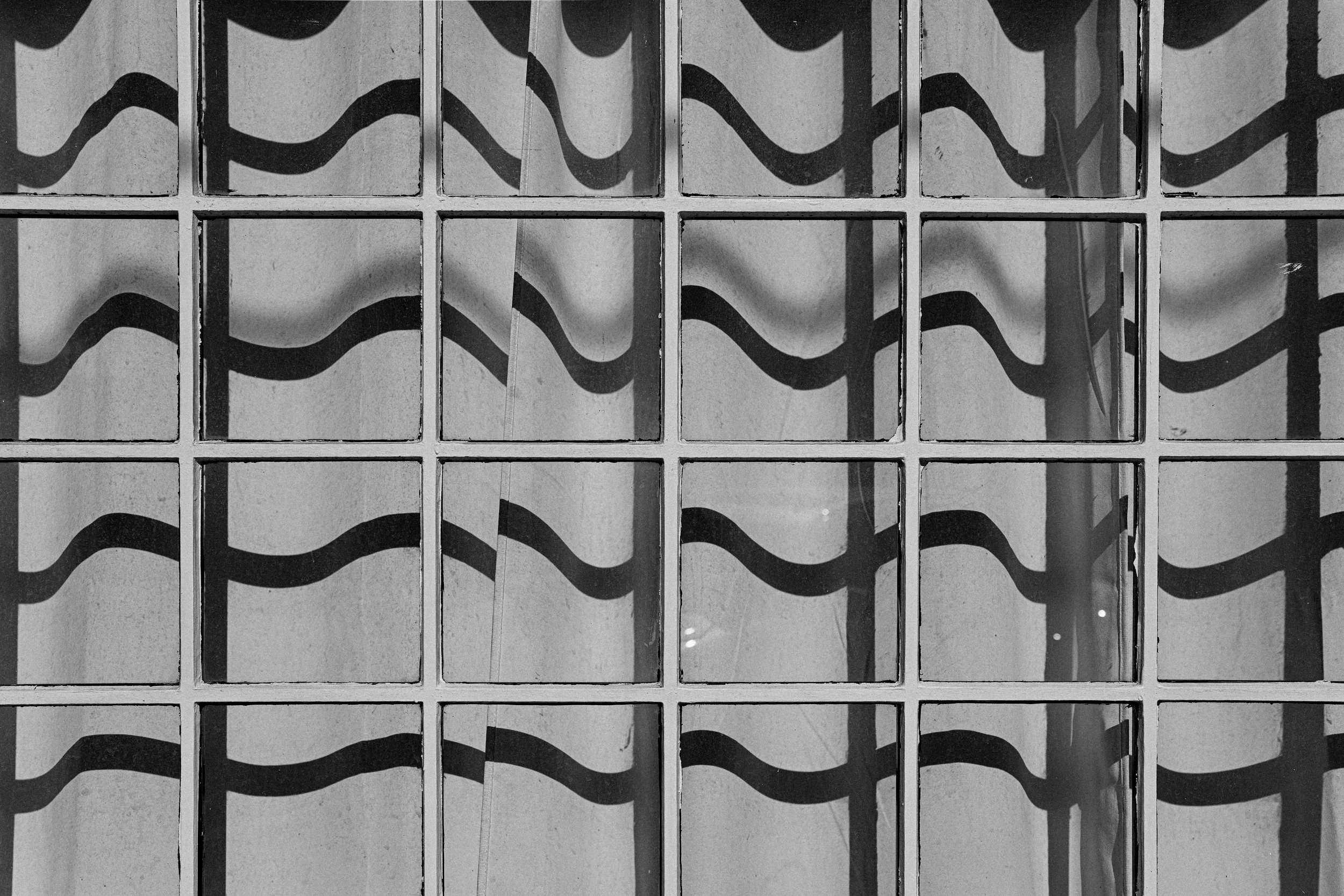
The 35 Pro is right at home shooting midday with a CPL installed. I use the Maven Filter magnetic CPL on my lenses when midday shooting. The benefits of shooting with a CPL is the ability to cut reflections, increase contrast and saturation, and lower exposure nearly a stop of light in harsh, direct light conditions. Below are a few samples from a noon walkabout. The 35 Pro enabled some really lovely shots full of details and texture during this outing.





Being a fast semi-wide lens, I was curious to see how the 35 Pro would handle some light astro. It’s the waning days of seeing the Milky Way in my neck of the woods, and while I don’t have respite from light pollution, it’s still dark enough to see a bit of the bands. I noticed immediately that the stars outside of the center of frame exhibit some swirl at f1.4 and the lights at the horizon are turning into tiny satellite dishes instead of being round points of light. This was a bit surprising, as I typically see this on smaller lenses that have sacrificed edge performance in order to be physically small lenses. Given the size of the 35 Pro, I would have expected a better showing outside of center for astro.

Not a bad photo, but performance is below my standards for serious night sky work
Image quality verdict: The 35 Pro shines brightest through the images it produces. Very low amounts of chromatic aberration, excellent microcontrast, and even light across the frame with the included profile allow for excellent exposures that provide both excellent JPEGs straight out of the camera and RAW files that need little tweaking in post. Within the Nikon ecosystem, the 35 Pro emerges as the image quality top dog in this segment of the market - you would have to upgrade to the nearly $3000 Nikon 35/1.2 S to get better photos at f1.4. The one area it failed to impress me was astro, demonstrating an amount of coma I find disqualifying for my night sky shots.
Conclusion
Overall, Viltrox has provided a well built lens that takes very nice images. In the end, that usually what we want from our lenses, right?
There are two things for me that muddy the waters for the 35 Pro:
Its full retail price of $829
The existence of other compelling options from Viltrox
On the first point, I’ll be blunt: I don’t feel like the 35 Pro is a good enough total package to warrant costing $829. There is nothing about the 35 Pro that separates it from the 50 or 85 Pro in terms of functionality or quality, so the 35 Pro being a full 50% more expensive than the 50 Pro makes NO SENSE to me.
Now, for the other Viltrox options - The 35 EVO and 35 LAB exist and are much more clearly defined in their roles and pricepoints:
The EVO is the inexpensive lightweight travel walkabout lens that won’t tire you from carrying it all day
The LAB is the uncompromising, best performing professional option that still comes in at less than half the price of the Nikon Z 35/1.2 S
Shopping the Pro against these Viltrox options, the EVO will save you half the money over the 35 Pro, and the LAB will open up new possibilities for about 20% more cost than the 35 Pro.
The 35 Pro makes way more sense with its 20% off launch discount taking it down to $663. If you have any interest in this lens, I’d highly recommend taking advantage of the sale instead of paying full price.
—————————————————————
It’s good, maybe even great, that the 35 Pro shares so much of that 50 Pro and 85 Pro DNA, but ultimately, that is what makes the 35 Pro somewhat disappointing…another large lens, but one with a uniquely large price tag to match.
Is taking good images most reliably in AF-C enough to earn over $800 from your wallet? You will have to determine this for yourself, but the 35 Pro is a very tough sell for me at full retail price. If you’re a hobbyist, you might be more likely to tolerate AF slowdowns and quirks. If you’re a working professional, you need the most predictable, most reliable lenses you can afford, and I don’t think the 35 Pro fits that bill in its current state at launch.
I am hopeful as always that this lens matures via firmware updates. Viltrox have remained committed to improving their lenses, often releasing multiple updates per lens and this lens did indeed receive a firmware update pre-launch during my testing. However, you should never buy a product on the promise of what it could become later…you have to look at what it is now and be willing to accept any flaws with the knowledge those may never be improved.
I waited with bated breath for this lens for over a year, hoping it would finally be THE lens to pick in the 35/1.4 space on Z mount…I wanted something that had better IQ than the Nikon, better build quality than the Sirui, and faster AF than the 35 EVO. While we mostly got that, it has come at a steep price if you don’t buy one at launch.
—————————————————————
If you’re reading this article between October 29, 2026 and November 30, 2026, the 35 Pro is looking pretty good at around $596 with coupon code SCOTTTUCKER.
If you’re a pro shooter looking for maximizing IQ and autofocus performance, look at the 35/1.2 LAB, given the relatively small price and weight differences.
If you’re a hobbyist, look at the 35/1.8 EVO instead so you can save $400 and travel light with a lens that is less than half the weight of the 35 Pro.
All of this is, of course, with an eye towards Z mount and without mentioning other non-Viltrox lenses in this space that are also compelling. Sony shooters, with access to the same options PLUS clean used copies of the excellent 35/1.4GM for roughly the same price, will have an even harder decision to make.
I wish the 35 Pro was a slam dunk recommendation. I’m sure it will find a following, but for me it ended up more like a missed opportunity than a culmination of Viltrox’s engineering and imaging developments over the last two years. Viltrox themselves proved to be their biggest competition by releasing the deeply compelling EVO and LAB 35mm lenses before this Pro.
The Final Word: at launch at $663, I can live with some of the 35 Pro’s shortcomings thanks to its deep discount…but come December, at $829 in this now ultra-crowded 35/1.4 space, the 35 Pro starts to feel like yesterday’s lens at tomorrow’s price.
$829 USD MSRP, $596 until November 30th at Viltrox’s online store with coupon code SCOTTTUCKER - click here to shop at Viltrox - Amazon - B&H
Below is a gallery of images I have taken during my time with the 35 Pro over the last few months, you can click any image to view it full size. My reviews and sample galleries are living beings, growing over time as more samples are captured…check back later for updated examples!
As always, I appreciate you reading my reviews and first looks. If you found this article helpful, please consider buying me a coffee with the button below so I can fuel up and bring you more content like this.
-Scott